
Brazosport ISD board votes to rezone Stephen F. Austin students to nearby campuses
Get AI-powered insights, summaries, and transcripts
Subscribe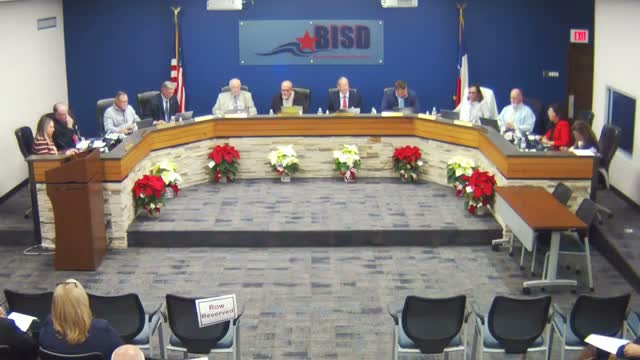
Summary
After hours of public comment, the Brazosport ISD board approved an administration recommendation to rezone Stephen F. Austin Elementary School students to neighboring campuses beginning in the 2026–27 school year; board members said staff jobs will be preserved while residents pressed for bond-accounting and transportation details.
The Brazosport ISD Board of Trustees voted to approve an administration recommendation to rezone students enrolled at Stephen F. Austin Elementary School (SFA) to neighboring district campuses starting in the 2026–27 school year.
The motion, made by Gary Atkins and seconded by Scott Schwartner, carried by voice vote after an extended public-comment period in which Jones Creek residents urged the board to postpone action and sought clearer accounting for bond funds tied to plans for SFA.
Why it matters: Administration said SFA’s long-term enrollment declines and a high per-student operating cost make continued operation unsustainable. The district presented feeder-pattern and 10-year enrollment trend data showing sharp declines in some feeder areas and said rezoning would better use district capacity while avoiding layoffs: “No SFA staff members will lose their jobs due to the closure,” administration stated.
What the board approved: The administration’s recommendation would rezone SFA students by grade band: pre-K through second grade to Freeport Elementary School and third through fifth grade to Lanier Elementary School, beginning with the 2026–27 school year. Transportation eligibility, district officials said, will follow existing policies: students who live more than two miles from their assigned campus will be eligible for bus service; routes will be developed once families indicate how many students request transportation.
Public concerns and board responses: Dozens of residents spoke. William Tidwell, a Trail Creek resident, said he worried about safety and early-morning long bus rides if elementary students were bused with older students, arguing “That’s not very safe.” Administration replied that the district typically staggers start times and would designate separate elementary and secondary routes so younger children would not ride with older students.
Community organizer Rhonda Cabrera demanded a public accounting of the $19,000,000 in bond funds that had been described to voters as supporting an SFA rebuild, asking bluntly, “Where did the money go?” Board members and administrators responded that bond spending on SFA has been limited to campus improvements and that a citizens’ bond oversight committee reviews bond expenditures; they pointed residents to prior budget workshops and meeting minutes for line‑item information.
Requests for delay: Several speakers—including Bert Smith and Mike Chilcote—asked the board to postpone the vote to provide additional financial backup, examine transportation cost modeling and explore a short-term enrollment recruitment effort to see whether transfers could boost SFA’s numbers. Board members said the district has discussed the issue with community leaders multiple times over several years and cited previous attempts (including a past reconstitution as a STEM-focused campus) that produced temporary enrollment increases but were not sustained.
Vote and next steps: The motion to adopt the reconfiguration passed on a voice vote. Administration said detailed routing and logistics would be developed once families indicate transportation needs and that all SFA staff would be placed at other district campuses. The board did not provide a roll-call tally in the meeting minutes; the official implementation timeline begins with the 2026–27 school year pending administrative actions and family notifications.
Context: District presenters earlier laid out statewide accountability criteria from the Texas Education Agency and described how campuses are designated CSI/TSI/ATS, and they cited enrollment patterns and funding impacts driving the recommendation. The board’s formal action followed multiple public comments and board discussion.