Get Full Government Meeting Transcripts, Videos, & Alerts Forever!
Get email alerts on the Lead Service Line Replacement topic
No spam. Unsubscribe anytime.
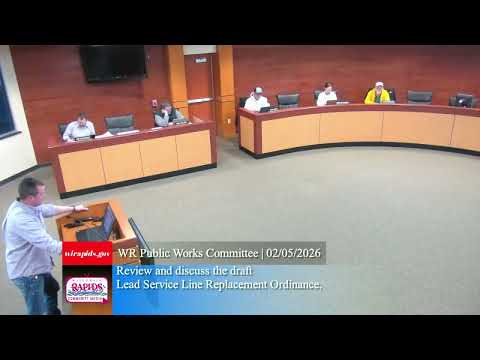
Public works committee reviews draft lead-service-line ordinance, asks for funding and legal details before council consideration
Summary
Committee discussed a draft ordinance to implement a federally driven 10-year lead service line replacement program; members urged clarity on resident notification windows, who will administer funds, and legal authority for city crews to perform private-side work before sending the ordinance to council.
The Wisconsin Rapids Public Works Committee discussed a draft ordinance to establish a 10-year lead service line replacement program that staff said is necessary for eligibility to apply for Safe Drinking Water Act funding.
Adam, who presented the draft, told the committee that federal legislation requires replacement of lead and galvanized services by November 2027 and that the city must have an ordinance in place before the June application for state funding: "If the ordinance is not in place, we cannot get the Safe Drinking Water Act funding that would be available." Staff recommended starting with CIP projects, using PFAS litigation funds and other grants to cover private-side replacements where possible.
Committee members pressed for more information on who would administer funds and how residents would be notified. One member said the draft’s minimum notice (45 days, drawn from another municipality’s ordinance) was too short for homeowners to organize contractors and suggested a longer window. Staff said they have inventory data for 2026 showing three lead services, one galvanized service and six customers who have not responded to outreach; staff proposed door-knocking those six residents.
Legal questions emerged about the city’s authority to replace private-side service lines. A committee member cited 2017 Wisconsin Act 137 as creating an exception for work ancillary to utility-side replacement performed with a private owner’s consent and asked whether city crews could perform private-side replacements. Staff agreed to seek legal interpretation before council action.
Committee members agreed no formal action was necessary at the meeting and requested staff and relevant departments (WWLC, finance, legal) to refine administration plans and financing; the ordinance will be discussed with the full council so all departments can weigh in before approval.