Get Full Government Meeting Transcripts, Videos, & Alerts Forever!
Get email alerts on the East Side Cba Opioid Model topic
No spam. Unsubscribe anytime.
East Side residents urge council to adopt ‘opioid model’ for CBA funding and stronger residency rules
Summary
Two public commenters representing the Together East Side Coalition urged the rules committee to adopt the 'opioid model' for Community Benefits Agreement funding, arguing local oversight and east-side board representation will ensure accountability and fair, competitive processes; one commenter asked the committee to strengthen residency language for board appointments.
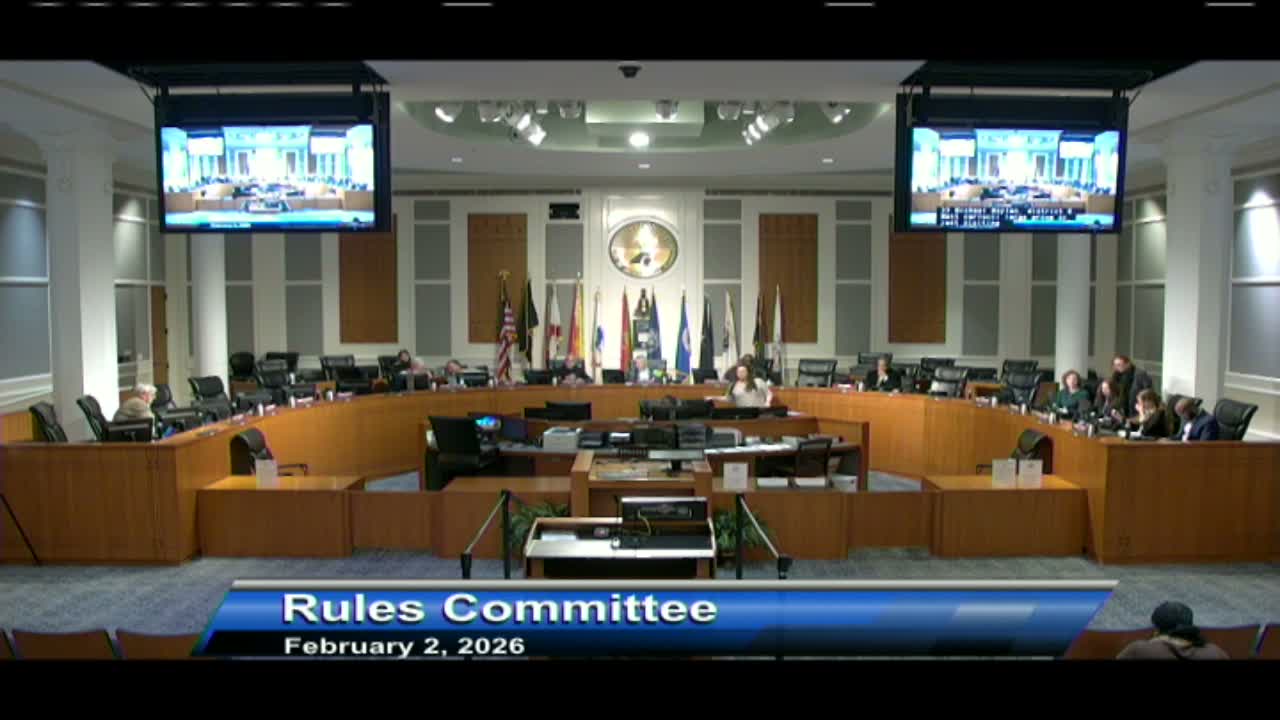
During public comment at the Feb. 2 Rules Committee meeting, two speakers representing East Side neighborhood organizations urged the committee to adopt the 'opioid model' submitted for Community Benefits Agreement (CBA) funding and asked for stronger local oversight provisions.
Latavia Harris said the Together East High Coalition Inc. supported the opioid model because, she said, "the accountability and the transparency that needs to be done...that's needs to be within the city" and that an outside entity "would not be best designed for the East Hart community." Harris told the committee that local scoring with east-side board members and city oversight would give the community confidence the funds were used as intended.
Kim Prior, also speaking for the East Side Coalition, echoed those views and raised a specific drafting concern about the substitute bill's language. Prior said the bill's qualifications currently state the mayor and council "shall endeavor to appoint members who reside in or have a substantial economic business interest in each of the 5 neighborhoods," and she urged the committee to consider stronger language because "what exactly does it mean when you say that they shall endeavor?" Prior asked whether the city intends that members must live on the East Side or merely have substantial business interests there.
Neither public comment resulted in an immediate committee action at rules; the speakers made their positions part of the official record and the chair moved on to the appointments section of the agenda.