
Jacksonville presenters back rental registry and ombudsman; legal counsel warns state law limits local power
Get AI-powered insights, summaries, and transcripts
Subscribe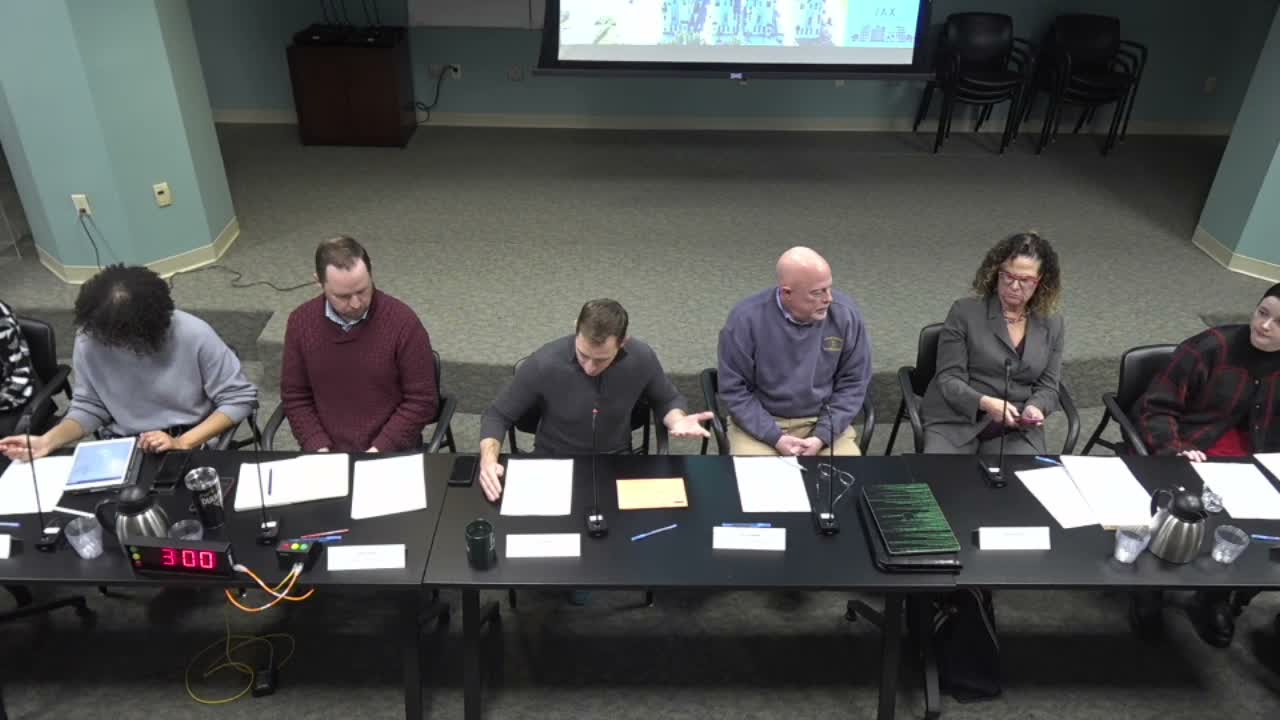
Summary
University and legal-aid researchers presented data showing 41% of Jacksonville households rent and high eviction filings; Jacksonville Area Legal Aid offered to build a public registry at no cost while city attorneys warned Florida Statute 83.425 preempts many local landlord-tenant regulations.
Council convened a public meeting to discuss proposals aimed at giving renters more information and recourse in Jacksonville, as university researchers and legal-aid attorneys laid out data on rental housing, eviction filings and concentrated ownership.
Katie Renzi, project manager for the JAX Rental Housing Project at the University of North Florida, said the research team has catalogued multifamily properties and rental outcomes and found "we have nearly 179,000 rental households in Jacksonville — about 41% of all households," and that renter incomes have not kept pace with rents. Renzi said the median renter wage is about $22 an hour while fair-market rent for a two-bedroom is roughly $1,600 a month, leaving many renters cost-burdened.
Jacksonville Area Legal Aid attorneys and partners described how the city’s eviction and housing conditions intersect. "Florida is considered one of the most landlord friendly states in the country," said a legal-aid presenter, explaining that short notice periods and procedural requirements make it difficult for tenants to raise habitability defenses in court.
Legal Aid offered to build a public-facing rental registry and work with UNF and city code compliance to populate it. A speaker at the meeting said the organization would provide that work "for free," and panelists suggested an initial focus on larger complexes and the most severe, unrepaired violations so prospective renters can see prior problems before signing a lease.
The city administration said it could house an ombudsman-like function within the newly reorganized neighborhood services outreach arm rather than creating a new headcount. Kelly O'Leary, representing the administration, said staff could add responsibilities to an existing supervisor but that technology and workload need to be quantified before assigning time allotments.
Chris Billings of code compliance described the department’s inspection process and cautioned that sharing the city’s large, real-time records with outside partners will require agreements or contracts and clear metric definitions: what violations to include, look-back windows and timestamps for when notices and compliance dates were issued.
Dylan Rangel, from the general counsel’s office, read a cautionary note to the council: "The statute specifically states, and if anyone wants to know, it’s 83.425... The regulation of residential tenancies... are preempted to the state." He said that Florida law broadly preempts local regulation of landlord-tenant matters and warned that local ordinances on those topics have faced and lost lawsuits.
Public commenters were split. Tenant advocates urged inspections, penalties for noncompliance and a transparent registry that lists ownership, past code citations and eviction filings. Landlords and property managers said a registry without enforcement will not stop bad actors and could impose costs and litigation burdens on cities. "The registry doesn’t solve enforcement," said one property manager who manages about 1,000 units.
Council leadership said the meeting results will inform next steps: the councilmember presiding said he will advance an annual "state of housing" report requirement, Jacksonville Area Legal Aid will pursue the registry development with UNF and the city will explore a colocated ombudsman role with code-enforcement coordination. The meeting adjourned without formal votes on any ordinance or motion.