
WESD presents new data tool, sets goal to reduce chronic absenteeism to 21%
Get AI-powered insights, summaries, and transcripts
Sign Up Free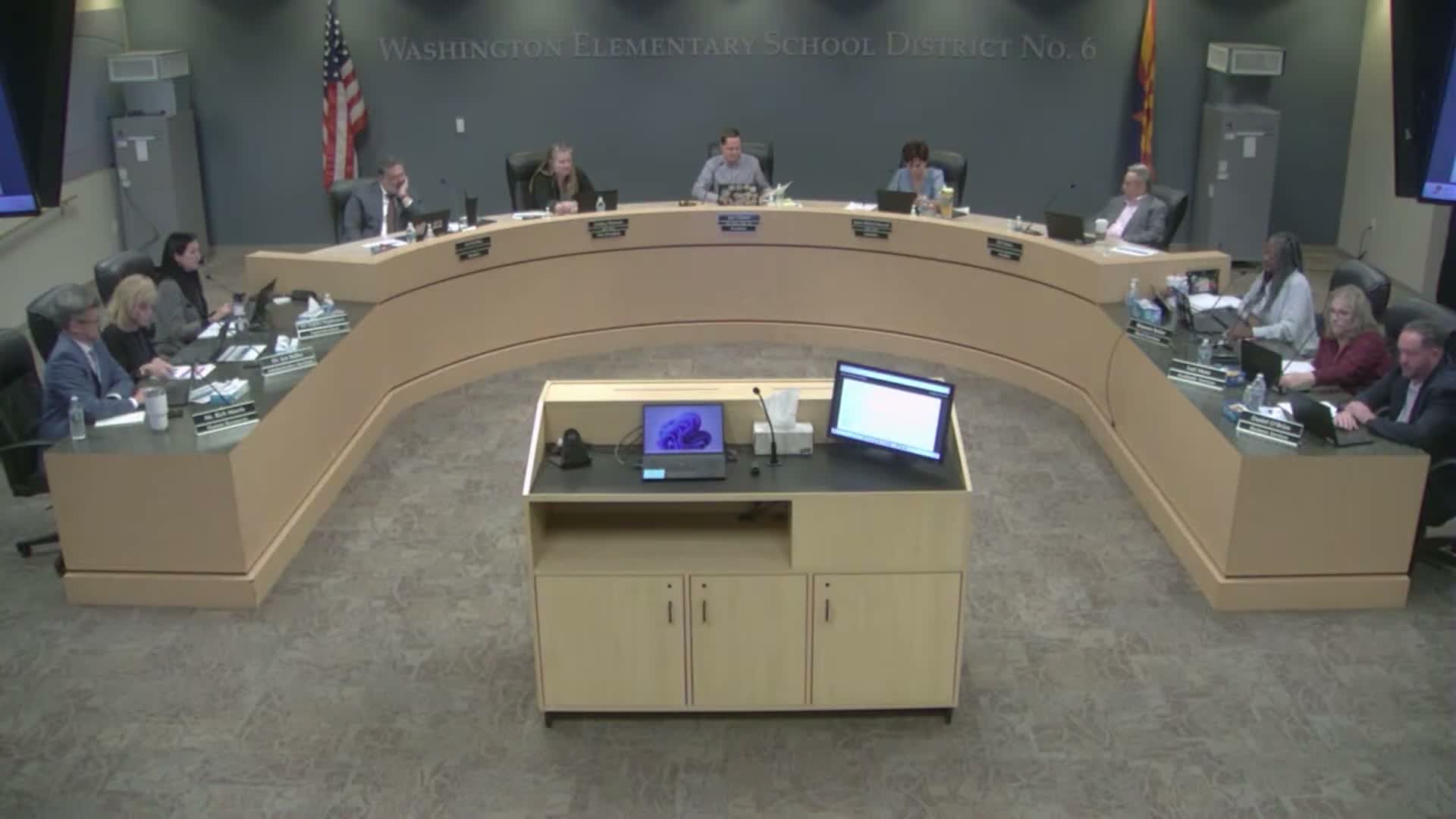
Summary
District staff told the Washington Elementary School District board that chronic absenteeism has fallen modestly and that a new MIS dashboard will give schools real‑time, student‑level visibility; the board asked for clearer percentage breakdowns and deeper analysis of causes.
The Washington Elementary School District governing board heard a midterm attendance report Jan. 29 that included new district tools and a renewed target to cut chronic absenteeism to 21 percent.
Perry Mason, the district's director of climate and culture, described a three‑part strategy the attendance committee has prioritized: ensuring district capacity and training, producing actionable data and building positive engagement at campuses. Mason said the district is working with Valley of the Sun United Way and Grama Shift Consulting and Coaching and has built a custom management information system dashboard to give principals near‑real‑time visibility into student absences and chronic patterns. "So lovingly, we're calling it the Josh right now," Mason said of the prototype MIS dashboard.
Mason told the board that while the district has made progress, the numbers remain a concern: at the end of last school year's first semester 981 students had missed 18 or more days; at the end of this semester that count was 834. The district's stated goal is to lower the chronic absenteeism rate from roughly 24 percent toward 21 percent.
Board members pressed for clearer context. Member Bill Adams asked whether declining enrollment might make percentage gains misleading; Mason said percentage measures account for enrollment but staff will report final population figures at year end. Vice President Lindsay Peterson and other trustees requested that future reports show per‑school percentages and population figures alongside raw counts to make comparisons fair for small and large campuses.
Staff highlighted strategies at higher‑performing campuses such as Palo Verde and Arroyo, where leaders use student support teams, on‑campus student centers and deliberate greeting practices so "three adults meet every student" on arrival to reduce barriers to entry. Mason also credited ParentSquare with improving communications and lowering the number of "unverified" absences.
Board members asked for follow‑up. Trustees requested a deeper attendance analysis that breaks absences into categories (excused, unexcused, chronic illness and unverified), geographic comparisons across feeder patterns and a report on the most common reasons families give for absences. Mason said schools are beginning to collect that information through student support teams and the district will return with a more detailed dive.
The board did not take policy action at the meeting; members directed staff to return with the requested breakdowns and exemplar materials for the planned principal learning academy.
The board's next regular meeting is scheduled for Feb. 12, when the district will present additional updates and related work plans.