Get Full Government Meeting Transcripts, Videos, & Alerts Forever!
Get email alerts on the Immigration Enforcement topic
No spam. Unsubscribe anytime.
Speakers urge Prince George's County to block ICE from county property and expand immigrant supports
Summary
Multiple public commenters told the County Council that ICE enforcement harms residents and urged the county to block ICE from county properties, expand food and rent assistance, provide multilingual legal materials and train police to check ICE warrants and IDs.
Several residents used their allotted public‑comment time at the Jan. 27 County Council meeting to press elected officials for local protections related to U.S. Immigration and Customs Enforcement activities.
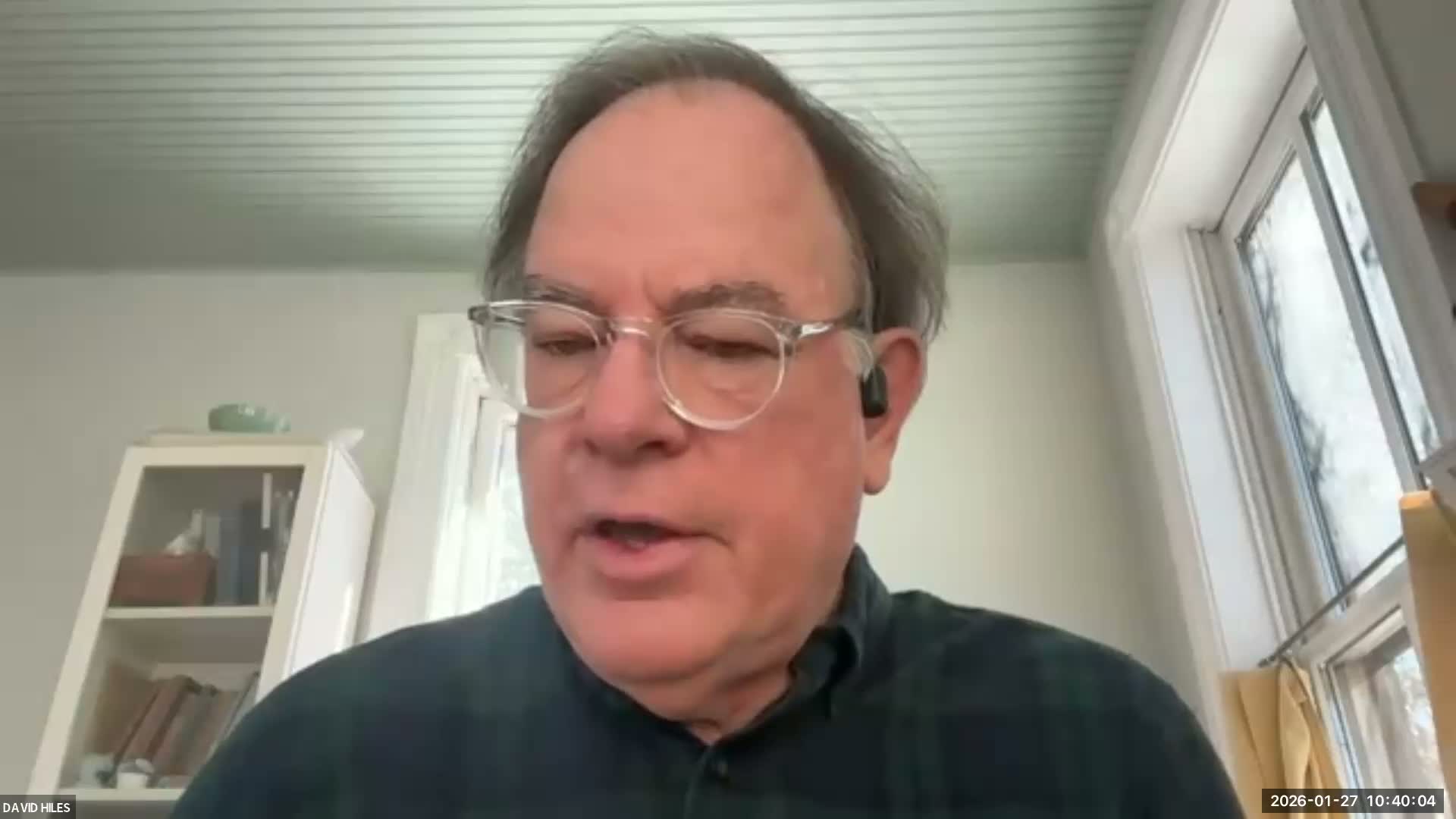
David Hiles of Hyattsville framed his plea in civil‑rights history and asked the council to "use the Prince George's County Police Department and the legal apparatus at your control to help protect the public safety of residents of Prince George's County." He said the county should move from a passive to an active stance to protect people who may be targeted by ICE.
Sarah Hines of Beltsville asked the council to adopt an order identifying all county‑owned properties within 30 days and to post signs and enforce trespassing to prevent ICE from using county parking lots, schools, courthouses, shelters, parks or health facilities for immigration interrogations. "Private property owners could opt out of allowing their lots to be used as well," Hines said, urging enforcement through the Prince George's County Police Department.
Other speakers asked the council to expand food‑security resources, lift intrusive data collection at food pantries, work with the state on rent relief funding for families whose breadwinners have been detained, and sponsor multilingual "know your rights" mailings and legal clinics. Doris Bartel, who volunteers at food pantries, told the council that many ICE‑affected families are ‘‘living in hiding without incomes’’ and asked for resources to reach them.
One public commenter, Nancy Feissner, urged the council to pass protections modeled on California and to train police to check ICE agents' IDs and warrants, saying in part: "Pass laws so that our police receive training." She cited a U.S. Supreme Court dissent and framed warrantless stops by ICE as civil‑liberties threats.
Council response: Chair Oriotta and several council members thanked speakers for raising concerns and noted that many of the items requested (expanded food assistance, legal clinics, and outreach) are services the county has pursued or can expand locally. Several council members and the chair said they and allies have previously supported legal clinics and food‑pantry expansion and expressed sympathy for families affected by ICE enforcement. The meeting did not include a formal vote on new county policy during public comment.
Provenance: These remarks are drawn from public‑comment segments during the meeting (SEG 046–103, SEG 111–181, SEG 247–346).