
Preliminary budget review shows ~$7.8M gap; medical benefits and special‑ed tuition are major drivers
Get AI-powered insights, summaries, and transcripts
Sign Up Free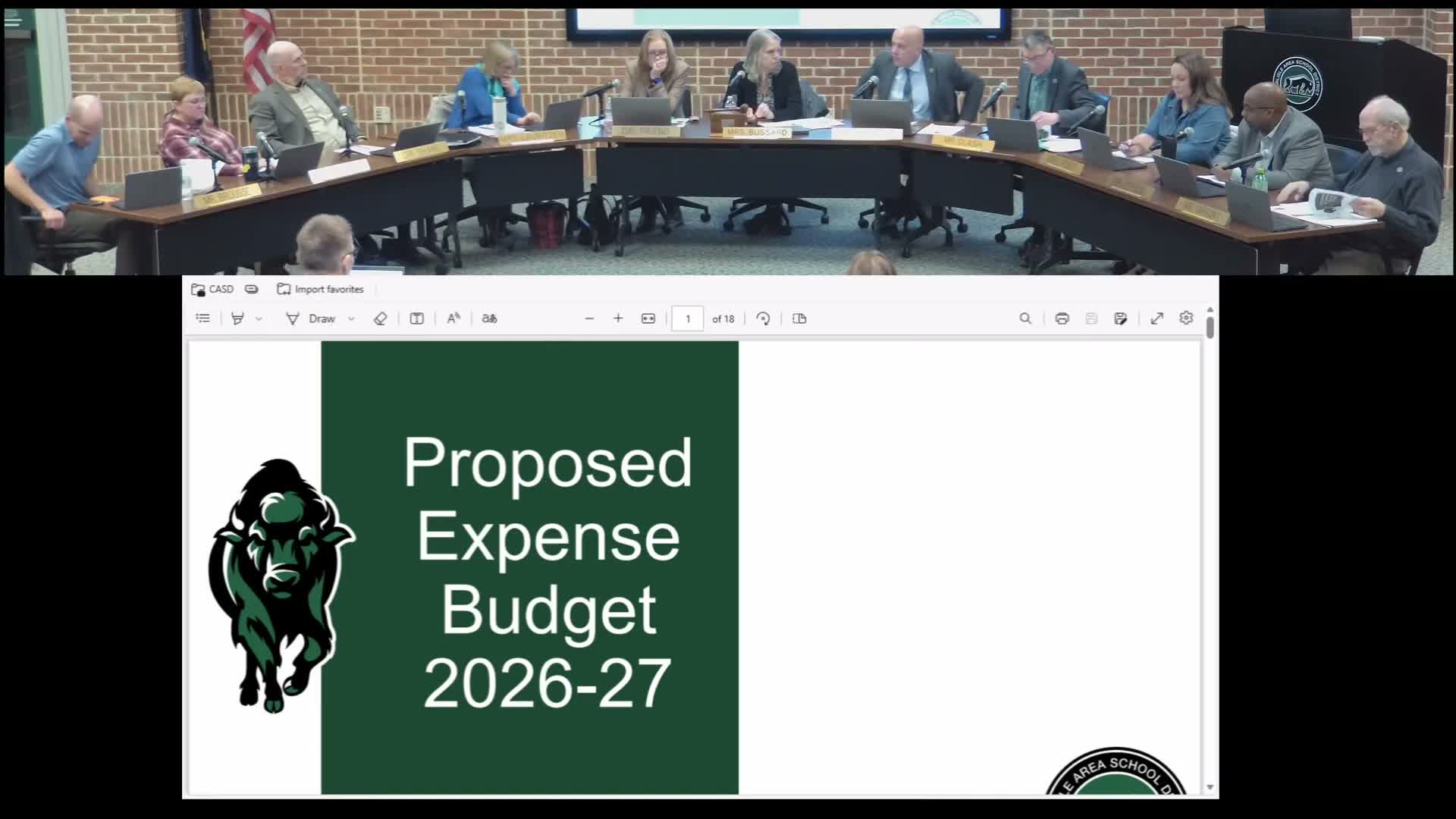
Summary
Finance staff presented a draft 2026–27 operational budget near $124–126M and said the district currently faces roughly a $7.8M gap before possible state funding; key cost pressures include wages/benefits, medical premiums, special‑education and charter tuition, and a near‑term debt‑service spike tied to planned borrowing.
Finance staff presented the board with an early look at the 2026–27 fiscal picture, flagging cost pressures and a preliminary gap that will shape upcoming budget deliberations.
Business office staff said the draft operational expense runs roughly $124–126 million. Key cost drivers include projected wage increases, a notable projected rise in medical benefits (staff noted prior premiums rose ~10% on Jan. 1, 2025 and projected plan changes could produce a larger year‑over‑year budget impact), and a projected 26% increase in special‑education tuition expenses. The presentation also included charter school tuition increases and a planned phase‑2 borrowing that produces a near‑term debt‑service spike: total debt service for next year was shown at about $9.6 million, representing roughly 7.6% of the budget.
The business office estimated a budget gap of approximately $7.8 million under current revenue assumptions. If the governor’s recently proposed education budget were fully funded and passed as proposed, the district staff said roughly $2.3 million of additional state aid could be realized — reducing the gap but not eliminating it. Board and staff agreed a line‑by‑line review will occur in April and that administration will return with refinement of assumptions and potential cost‑savings options.
The committee discussed timing: May is the typical moment for a proposed final budget followed by June adoption. Administration said it will continue internal conversations on priorities — including potential additions for math interventions or other student supports — and will bring concrete proposals back to the board.
No final budget vote occurred at the committee meeting; staff will return as timelines progress.