
CPS presents enrollment projections and ZIP‑code market‑share analysis; board presses for strategic plan and clearer middle‑school model
Get AI-powered insights, summaries, and transcripts
Subscribe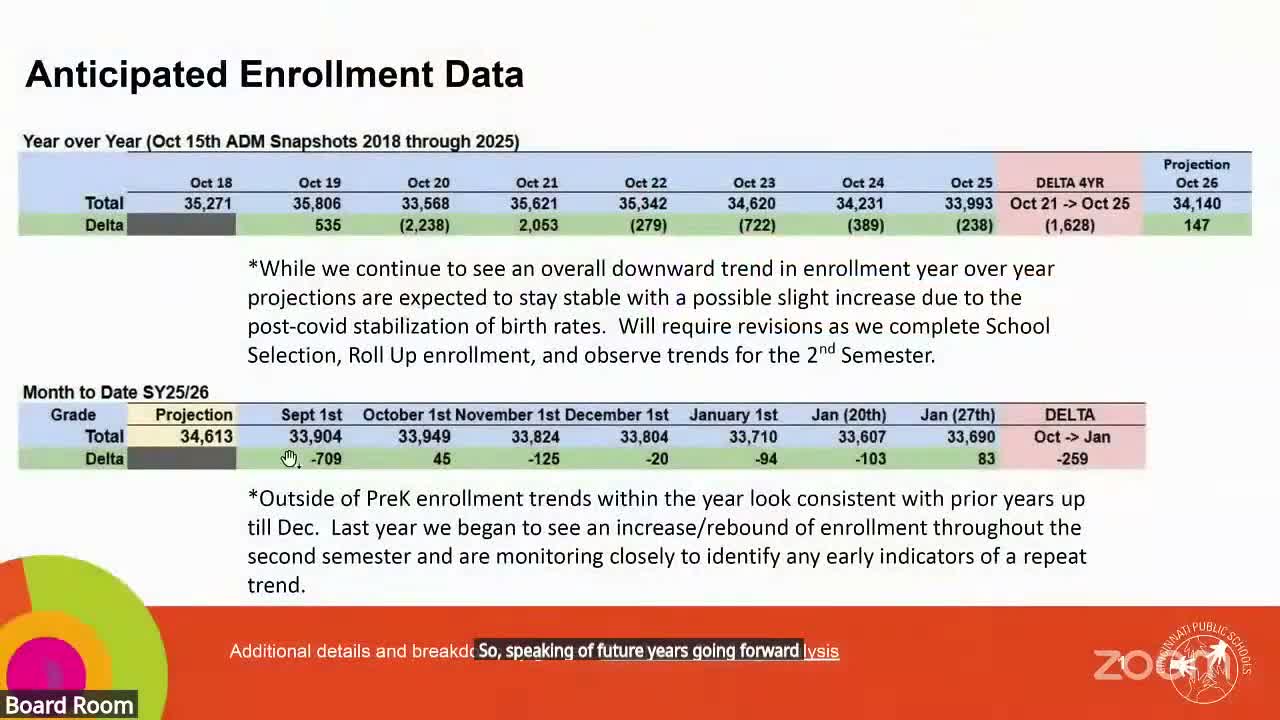
Summary
District staff presented enrollment projections (first projection ~34,140), a ZIP‑code heat map showing pockets of children not enrolled in CPS, and asked the board for strategic‑plan goals. Trustees pushed for aggressive recruitment, reuse of past engagement data, board involvement in vendor selection and clearer middle‑school implementation.
Administration presented a three‑stage enrollment projection process and a ZIP‑code market‑share analysis designed to identify children not currently enrolled in CPS and target outreach.
The administration’s first projection—based on the October ADM snapshot and demographic trend data—estimated district raw enrollment near 34,140, but staff cautioned that later projections (after school‑selection processing and year‑end roll‑up) may show declines. Enrollment staff noted a four‑year net attrition of 1,628 students since October 2021 as context for concern.
To guide recruitment, staff presented a market‑share spreadsheet and an interactive heat map that compares ‘‘known’’ CPS students to census totals by ZIP code and highlights neighborhoods with large numbers of children the district does not yet serve. Staff said the data can be used to prioritize marketing, magnet recruitment, and community outreach.
Board members urged faster and clearer communications with families and asked administration to capture better exit and re‑enrollment information (where students go when they leave and why), to disaggregate the data by grade and school, and to work with the city where development patterns affect population shifts. Trustees also discussed the implications of vouchers, charter growth and housing change on long‑term enrollment.
The retreat also included a wide discussion about middle schools. The board confirmed the district is implementing a 6–8 middle‑school continuum but asked administrators to clarify consistent implementation across campuses and to better explain how the middle‑school model differs from a junior‑high model (developmental team teaching and exploratory blocks versus departmentized, subject‑focused junior high). Several trustees said the board previously approved a 6–8 middle‑school policy but requested more visible parent outreach, summer bridging, and consistent discipline/academic approaches across the new campuses.
Next steps: administration will disaggregate the market‑share data by ZIP and school, provide entries/exits analysis where available, incorporate the enrollment findings into the strategic‑plan work, and bring clear middle‑school implementation guidance and family‑communication plans back to the board.