Recreation committee raises per-project cap to $100,000, keeps 25% local match and moves to single annual round
Loading...
Summary
The Garrison Diversion recreation committee voted to raise the per-project award cap to $100,000 for the spring round, left the spring local cost-share at 25%, and shifted to a single annual application with a March 1 deadline; members also directed executive review of the program's $2.16 million reserve amid criticism from Burleigh County.
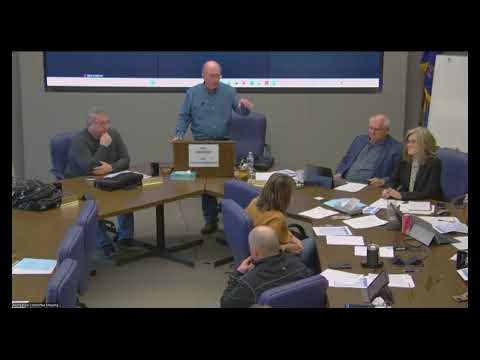
At a meeting of the Garrison Diversion recreation committee, members voted to raise the program's per-project award cap from $50,000 to $100,000 for the upcoming spring round, decided to leave the spring local cost-share at 25%, and approved moving to a single annual application cycle with a March 1 deadline.
The committee heard a financial briefing from program staff. "Last year, that two-tenths was $960,000," Mary, program staff, told the group, describing the committee's annual allocation. She said there are committed outstanding projects (about $1.396 million) and an uncommitted recreation reserve of roughly $2.16 million available for future awards and projects.
Members discussed how the program's award limits evolved: there was no formal cap historically, $75,000 was set in November 2021, and the cap was reduced to $50,000 in April 2025. Several participants noted the program now receives far more applications and larger projects than in earlier years, with recent spring and fall requests totaling about $9.3 million.
Concerns that the reserve's size could attract scrutiny from county officials and the legislature surfaced repeatedly. One member raised criticism from Burleigh County that the program had funded projects such as a pickleball court that some counties view as outside the diversion unit's core authorities; speakers said clarifying eligibility and emphasizing water-related recreation projects could reduce that political risk.
Committee debate focused on three practical policy questions: whether to raise the per-project cap for the spring round, whether to adjust the local cost-share percentage for water projects, and whether to consolidate application rounds. "I would move that we, move the maximum up to 100,000," said the member who made the motion; the motion was seconded and carried by voice vote. The chair later announced, "That motion carries."
On the local match, members discussed allowing flexibility up to 50% for water-focused projects but staff warned that such flexibility would require clear scoring criteria and could invite creative re-interpretations of eligibility. For the spring round the committee retained the current 25% local cost-share so as not to require immediate reissue of application materials already in circulation.
The committee also voted to move to one annual application round with a March 1 deadline (the spring cycle), a change committee members said would simplify administration and make available clear funding limits for applicants when they budget. Members agreed staff should update the application materials and notify county auditors and applicants; the group planned a web announcement and mailed letters to jurisdiction contacts.
Members asked the executive committee to develop a recommendation on how to manage the roughly $2.16 million reserve so the program could both defend itself to legislators and spend funds where they are most needed. The meeting ended with agreement to publicize the changes and to reconvene governance-level discussion about reserve strategy.
The committee adjourned after the votes; no roll-call vote tallies were recorded in the transcript.