Get Full Government Meeting Transcripts, Videos, & Alerts Forever!
Get email alerts on the Mental Health Jail Diversion topic
No spam. Unsubscribe anytime.
Highland Health outlines jail-diversion telehealth pilot for Cleburne County
Summary
Highland Health presented the "Step Me Up" initiative to the Cleburne County Commission, proposing in-jail case managers and an iPad-based telehealth pilot with local law enforcement and schools to reduce jail stays linked to mental illness and improve continuity of care.
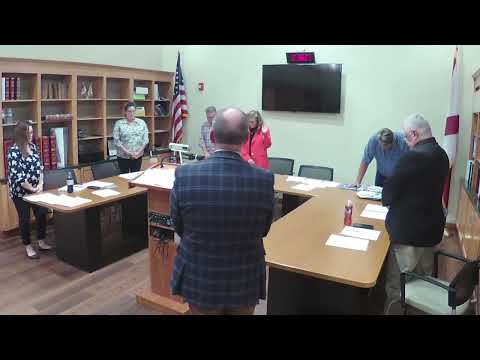
Highland Health representatives described a jail-diversion and continuity-of-care pilot to the Cleburne County Commission on a presentation given during the county’s regular meeting. The program, called "Step Me Up," would place a case manager in the county jail, screen qualifying inmates with a brief tool, and provide up to a year of community case management after release.
The presenter said the program combines in-jail screening and follow-up services to reduce the number of people cycling through jail who have untreated mental-health needs. "What we wanna do is put a case manager in the jail," the presenter said, adding that the screening uses an eight-question guideline and that many inmates show underlying behavioral-health issues. The presenter estimated the approach could cut the jail population impacted by mental illness by roughly 35–45 percent for the individuals targeted.
The plan includes a telehealth component: deputies would carry an iPad that connects, with a single button press, to Highland Health clinicians; schools could use the same device to connect students to therapists. The presenter said the first-phase pilot partners would be the Cleburne County Sheriff’s Office, Anniston Police Department and Piedmont Police Department. "If they get to the scene... there’s one button," the presenter said, describing how officers would connect someone in crisis to a remote clinician for assessment and brief intervention.
Commissioners asked about cost and inpatient capacity. Highland Health said creating a full urgent-care psychiatric facility would be expensive (the presenter estimated roughly $5 million to operate), and positioned the iPad telehealth model as a lower-cost alternative that leverages remote clinicians. The presenter said funding for program startup would come from state sources for the telehealth component and that Highland Health would seek partnerships to staff case management. Case managers would be expected to hold at least a bachelor’s degree in a social-science field, the presenter said.
The presentation included operational details: a two-part screening process to determine eligibility while someone is incarcerated, an in-jail caseload that can continue into community care for up to a year, and a pilot caseload target of about 30–40 high-risk individuals. Highland Health also discussed using telehealth for critical-incident support for first responders.
No formal vote or contract award was recorded during the meeting; the item was presented for information and initial discussion. Commissioners and staff signaled interest and asked staff to follow up on program details, funding sources and operational agreements with law enforcement and regional health providers.
What’s next: staff follow-up to clarify funding commitments, finalize pilot partner agreements and return to the commission with a recommended implementation plan and any formal requests for county action or funding.