
Cochise County chosen for Mayo Clinic fentanyl‑education pilot using adaptive app in schools
Get AI-powered insights, summaries, and transcripts
Subscribe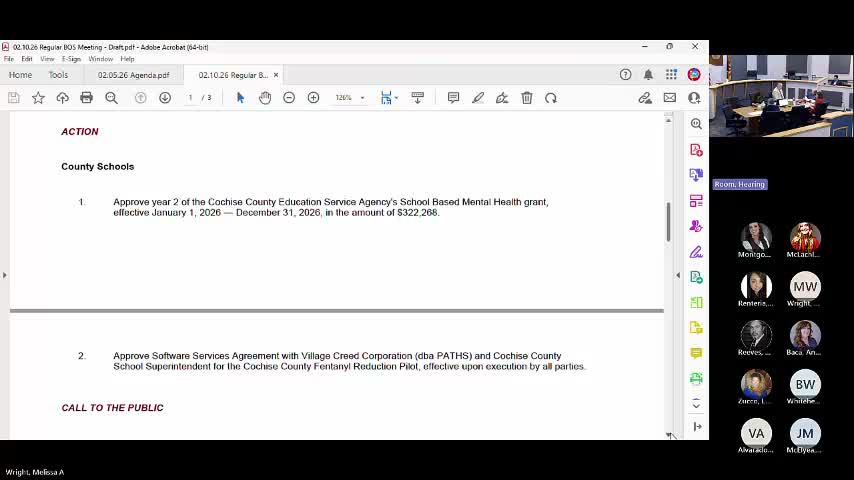
Summary
County officials said Feb. 5 the Mayo Clinic selected Cochise County as a pilot site for an adaptive education app aimed at 8th–12th graders, with the program set to collect student response data and integrate into health classes; the NFL Foundation was cited as a funding source to Mayo Clinic.
The Cochise County Board of Supervisors heard staff on Feb. 5 describe a pilot program in which the Mayo Clinic will deploy an adaptive educational app about fentanyl to students in eighth through 12th grades across multiple districts in the county.
Cynthia Myers, who presented the Year 2 overview of the county’s school‑based mental‑health grant, said the Mayo Clinic selected Cochise County for the pilot and that the application personalizes education based on student responses. “They chose Cochise County as their pilot county,” Myers said, describing an app that routes students down different educational “rabbit holes” depending on their answers and that will collect data on what students report and ask.
The nut of the program, staff said, is prevention and early identification. Myers and project staff said the app can run on student cellphones or on classroom devices and that districts will use it in existing health curricula so teachers do not carry extra workload. Project coordinator Lorena Telesa described use of the SHAPE plan platform to complete a needs assessment to help prioritize schools and staffing needs.
Staff also said the Mayo Clinic’s pilot work is funded in part through an award the clinic received (staff referenced the NFL Foundation’s involvement to Mayo Clinic) and that eight middle/high school districts have been invited to participate. The county intends to track engagement and to use aggregated data from anonymous responses and the app’s adaptive pathways to refine local services and referrals.
Board members pressed staff on measures of effectiveness and on how the program will handle cases where prevention fails. Myers said the grant’s measurement tools and the SHAPE platform will provide baseline and follow‑up metrics and added that the county will report changes over time once providers are embedded in districts.
Next steps: staff said they will seek board approval on the formal agreement for Year 2 grant reporting and the pilot implementation at the regular meeting; the board shifted the timing of those items so the county superintendent could attend the regular session.