Get Full Government Meeting Transcripts, Videos, & Alerts Forever!
Get email alerts on the Development Incentives topic
No spam. Unsubscribe anytime.
Oklahoma City Economic Development Trust approves TIF incentives for four Midtown projects
Summary
The Trust on Oct. 21 approved a set of pay-as-you-go TIF allocations totaling several million dollars to support four Midtown redevelopment projects, including a 26-unit apartment phase at NW 11th & Lee, a boutique hotel at the historic Villa Teresa campus, Brown's Bakery for Summer Moon, and a mixed-use site called "The Eddie."
OKLAHOMA CITY
The Oklahoma City Economic Development Trust on Oct. 21 approved a series of pay-as-you-go tax-increment financing incentives to support multiple Midtown redevelopment projects, saying the assistance is intended to make otherwise marginal early-year returns viable for small-scale urban infill. The votes came by motion and voice; no roll-call tallies were recorded in the meeting transcript.
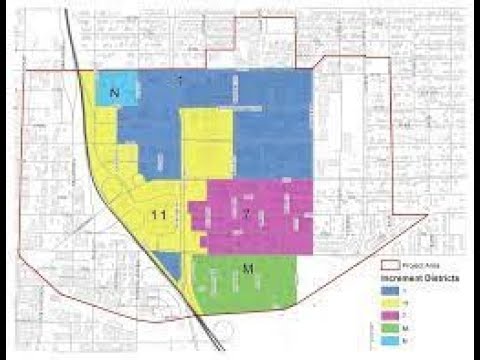
The most immediate allocation approved was up to $660,000 from TIF D for a project at Northwest 11th and Lee, introduced by Mr. Sutil. "This deal would be contingent upon all the various bodies approving the addition of this into the Classen Corridor TIF," Mr. Sutil said, describing the structure as an 80% rebate of property-tax increment in years 1'5 and 50% in years 6'15, with total rebates not to exceed $660,000. Jeremy Gardner of Gardner Studio said the phase is "a three-story, 26-unit apartment project," largely one-bed units, with resident parking served by an adjacent garage.
The Trust also approved a joint resolution allocating up to $2,000,000 from TIF D toward the hotel portion of the Villa Teresa campus, described in the meeting as a roughly $29.5 million project. "We bought the property in December 1917," said Marva Ellard, a project partner, noting the hotel will include about 68 rooms with restaurants and a pool. Ellard said the project's historic tax credits and a tax-credit partner tied to the lender are secured. The proposed rebate structure presented to the board was 80% of the tax increment in years 1'5 and 60% in years 6'15, with total rebates capped at $2,000,000.
A $766,263 allocation to support the Brown's Bakery redevelopment at Northwest 10th and Walker also passed. Chris Fleming described the site as a historic-tax-credit project that will house a production bakery to supply the local coffee chain Summer Moon and include retail space; Fleming said the bakery will restore a roughly 5,500-square-foot former grocery building and that investor interest and tax-credit financing are in place.
Finally, trustees approved support for a mixed-use redevelopment of the former MSSA site, referred to in the meeting as "The Eddie." Presenters described roughly 13,000 square feet of ground-floor retail, 48 apartments on upper floors, a small publicly accessible park with an amphitheater for 80'100 people, and about 87 on-site parking spaces. The TIF request was described as a pay-as-you-go rebate with a cap "not to exceed $2,533,025" and a total project cost cited in the presentation as roughly $19.8 million to $21.3 million depending on park costs.
Trust staff and presenters repeatedly described the requested TIF assistance as necessary to improve early-year cash-on-cash returns for small urban projects that lack scale economies. Mr. Sutil said the Trust can approve minor amendments and removals under the downtown TIF when they do not add more than 5% to the increment area; several parcels were identified for removal from the downtown TIF to allow later addition into the Classen Corridor TIF.
The approvals at the Trust level are contingent on additional steps described by staff: projects must be added to the Classen Corridor TIF where required and receive any necessary City Council approvals, and the allocations are structured as pay-as-you-go rebates over the first 15 years of incremental property-tax receipts. The meeting record shows motions and seconds and the chair announcing each item "passes," but does not record individual votes by member.
Next steps: presenters said project financing remains contingent on those approvals and, in some cases, on historic tax-credit closings. Several presenters told trustees tax-credit financing and investors are in place; trustees received the presentations and approved the allocations.