
Claremore council approves midyear budget adjustments, appoints trustee and adopts four ordinances on permits, garbage and utilities
Get AI-powered insights, summaries, and transcripts
Subscribe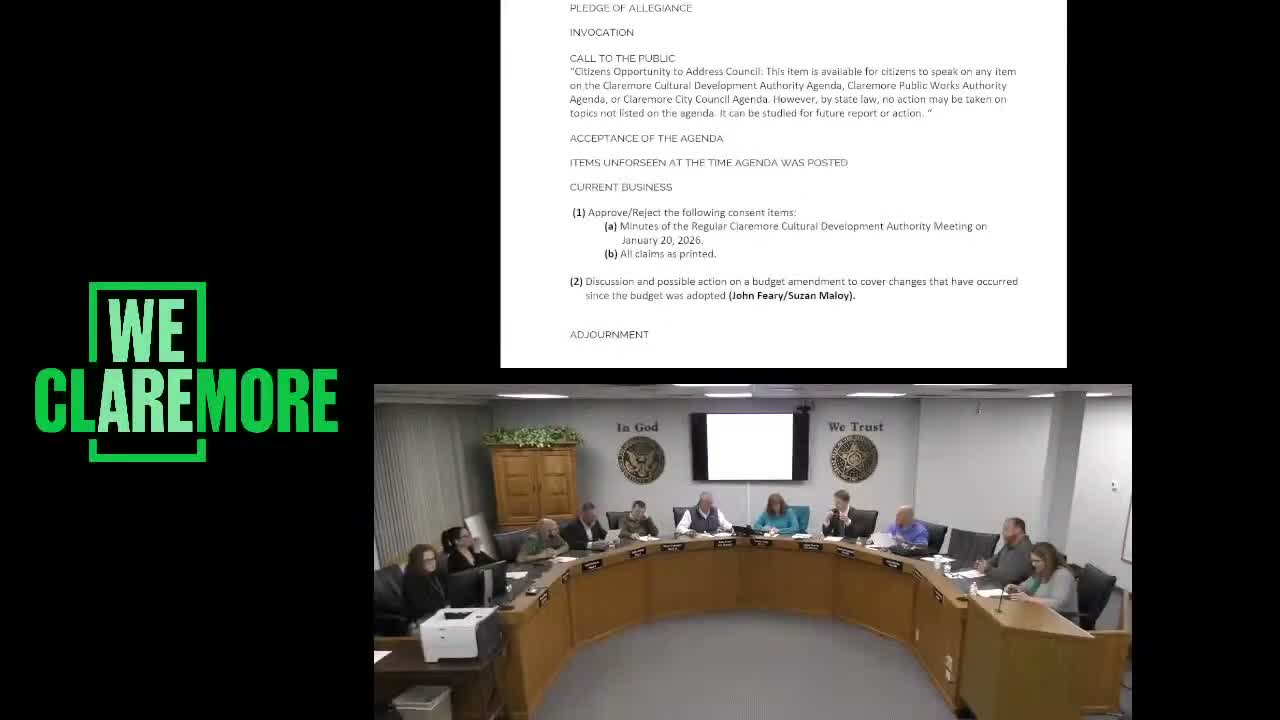
Summary
Claremore officials approved midyear budget amendments that reflect a nearly $3 million Cherokee Nation reimbursement, confirmed a trustee appointment to the city’s industrial development authority and adopted four ordinances covering garage‑sale permits, garbage service, utility deposits/fees and electric service procedures; council debated fairness of higher utility deposits.
Claremore’s city council approved a midyear budget amendment and adopted four ordinances Tuesday after staff outlined timing adjustments and reimbursement receipts that altered budget projections.
The council voted to accept a budget amendment that reconciles revenue and expense timing, including a $2,990,000 reimbursement from the Cherokee Nation tied to the Plaza property purchase that arrived in the current fiscal year. City manager said the change reduced reliance on reserve balances by roughly $683,000 and moved funds among several accounts to match when revenue was received. “The reimbursement from the Cherokee Nation did not come through till this fiscal year,” the city manager said while reviewing fund‑level changes.
Why it matters: The amendment adjusts the city’s midyear spending plan and frees up reserve reliance in several funds, allowing staff to reallocate funds for ongoing infrastructure and program needs as the fiscal year continues.
In other votes the council:
- Confirmed the appointment of Jeffrey Ray as a trustee of the Claremore Industrial and Economic Development Authority for a four‑year term expiring June 30, 2029. The motion passed on a roll call vote.
- Adopted ordinance No. 2026‑2 to revise garage‑sale permitting language and raise the permit fee from $5 to $7 to cover sign costs and enforcement of right‑of‑way rules. Staff said the change aligns the permit fee with the cost of producing and managing signs and discourages commercial operations masquerading as frequent garage sales. Council discussion noted an existing distinction for estate sales and emphasized enforcement of sign removal.
- Adopted ordinance No. 2026‑3 to remove commercial sanitation language from the city code after changes to commercial trash collection arrangements. Staff described the change as a cleanup of existing code to reflect the new service structure.
- Adopted ordinance No. 2026‑4 adjusting utility billing policies and deposits. Staff stressed the ordinance does not increase utility rates; it instead revises deposit calculations (moving commercial averaging to a 12‑month basis), tightens eligibility for payment arrangements and discontinues acceptance of letters of credit for deposits. Under the ordinance, customers who maintain 12 consecutive months in good standing may request that a deposit be credited to their account; if they do not request it, the deposit remains on the customer’s account and is applied to the final bill when service terminates. Several residents expressed concern that requiring customers to "request" a refund could be unfair, and questioned the size of the deposit increases. A resident said, “I don’t think we should have to request” the refund; staff responded the deposit remains the customer’s money and is either credited to the final bill or refunded by check when service ends.
- Adopted ordinance No. 2026‑5 updating electric service rules, including removal of extended delayed‑payment arrangements and modest fees for repeat meter checks; staff said the city will waive charges if a meter is found to be malfunctioning.
Council and staff said the utility changes aim to reduce a growing amount of delinquent balances the city has carried and to align deposit policies with costs and audit requirements. Staff outlined outreach efforts and an average‑billing enrollment window to help customers spread payments.
What’s next: Staff said the next regularly scheduled council meeting will be held at Rogers State University and will include a public presentation by the developer of Project Mustang; no vote on that project is expected at that meeting. The council concluded its business and adjourned.
(Reporting based on public meeting transcript; vote records and roll‑call names are taken from the meeting’s roll calls.)