Get Full Government Meeting Transcripts, Videos, & Alerts Forever!
Get email alerts on the Elected Vs Appointed topic
No spam. Unsubscribe anytime.
Glendale committee weighs keeping city clerk and treasurer elected; staff asked to return with compensation and qualification options
Summary
After presentations from staff and elected officers, the committee discussed whether to convert the city clerk and treasurer to appointed posts. Most members expressed a current preference to keep the offices elected but asked staff to provide options on salary-setting, charter guardrails and possible qualification language.
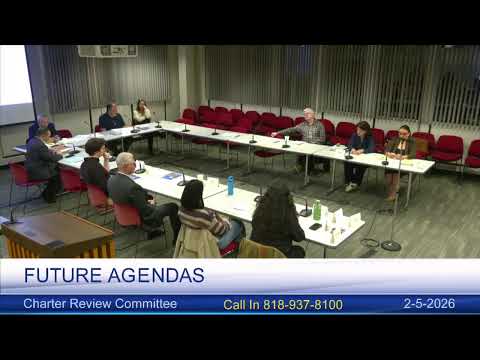
The Charter Review Committee spent the second half of its Feb. 5 meeting examining whether Glendale’s city clerk and city treasurer should remain elected offices or become appointed positions.
City staff summarized current duties: the city clerk administers elections, keeps permanent records of ordinances and resolutions, manages agendas and public‑records responses; the city treasurer handles receipts and disbursements, bank relationships, investment portfolio management and trustee duties for bonds. Mr. Garcia told the committee voters have rejected prior efforts to make the offices appointed (1943, 1972, 1979 and 2013 were cited) and that staff has no position on the matter.
Elected officials addressed the committee. Dr. Susie Abadgian, who identified herself as the democratically elected city clerk, urged keeping both offices elected to preserve “voter accountability and independent oversight,” saying appointment would concentrate power in the council and administration. The treasurer (transcript references Rafi/Ralphie Manukian) stressed the importance of financial expertise and suggested the charter could include a non‑binding preference for financial or accounting backgrounds while warning that political influence can affect both appointed and elected officers.
Public commenters and committee members debated tradeoffs. Supporters of keeping the offices elected said voter accountability preserves independence; others noted elections can deter qualified candidates because of campaign burdens and low candidate turnout (the treasurer has frequently run unopposed). Committee members raised staff capacity and the need for guardrails: several asked staff to return with the current compensation‑setting process (executive benefit resolution and how salaries and full compensation are determined), examples of charter language to protect salary setting from arbitrary change, and possible, narrowly worded qualifications that would not unduly restrict candidacy.
The committee did not adopt formal language at the meeting. Instead members directed staff to return at the next meeting with (1) a description of how clerk and treasurer compensation is set today, (2) sample charter language or benchmark approaches to limit arbitrary salary reductions, and (3) options for lightly prescriptive qualifications for both offices and for adding audit/oversight considerations. The committee also expressed interest in a separate discussion on an independent audit commission and whether controller responsibilities should be tied to the treasurer.