
Witnesses urge study and caution on Vermont Energy Equity Law; PUC points to Act 142 study
Get AI-powered insights, summaries, and transcripts
Subscribe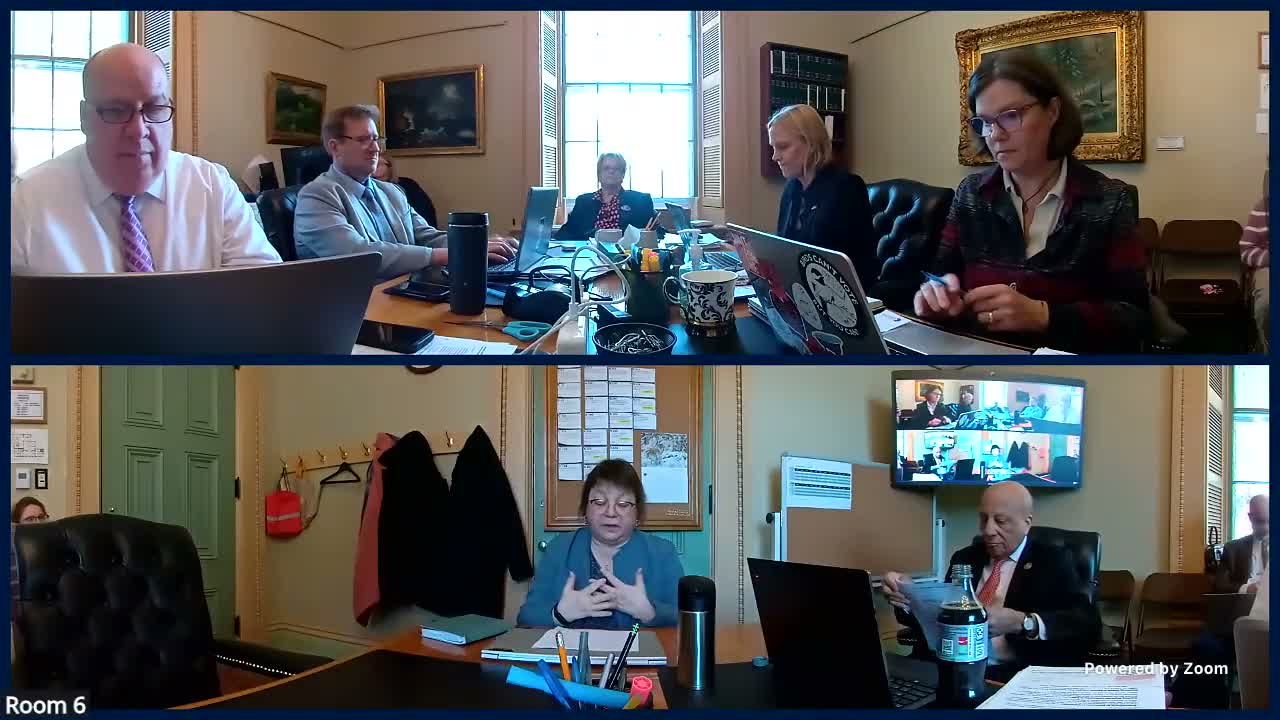
Summary
At a Finance committee hearing on S.204, Carol Flint of the Department of Public Service urged a year of analysis before creating a statewide low-income rate program, citing rising disconnects and program design questions; a Public Utility Commission representative said the PUCstudy recommends against a new statewide program. The committee requested PUC rule text and the PUCstudy and took no vote.
Carol Flint, director of consumer affairs and public information at the Vermont Department of Public Service, told the Finance committee that the proposed Vermont Energy Equity Law (S.204) aims to address energy affordability but that the department wants more analysis before implementing a statewide low-income rate program.
"Disconnections increased by about 31% between April 2022 and April 2025," Flint said, adding that many disconnects for nonpayment were followed by reconnections within 15 days. She told lawmakers the department is focused on affordability and is already helping homeowners reduce bills through efficiency efforts.
Flint said Vermont has long-standing consumer protections in its residential disconnection rule (Rule 3.3), including physician-certificate medical exemptions and appeals to the Public Utility Commission (PUC), but noted the rule does not currently include explicit language about extreme-heat protections. She recommended the committee allow about a year for additional analysis to determine program design elements such as discount levels, how costs would be recovered, whether discounts should apply to full bills or portions, and how to ensure eligible participants enroll.
"We suggest the committee consider providing a year to perform that analysis," Flint said, urging a comprehensive review of existing programs and policies so any new program can be targeted and avoid unintended disparate outcomes.
A PUC representative, identified in the hearing notice as Greg Faver, told the committee the commission had already completed the analysis sought by the department. The witness said the PUC submitted the Act 142 of 2024 energy cost stabilization study on Dec. 1 and that its executive summary concludes: "given the number and variety of low income energy assistance programs currently available, the commission does not recommend that the legislature create another statewide program." The PUC also wrote that it does not recommend requiring utilities to participate because that would spread costs to all ratepayers while providing only modest benefits to participants.
"If we went forth and did it, it would require substantial resources," the PUC witness said, adding the commission would likely need to hire staff and that implementation would take longer than the six months allotted in the bill.
Committee members asked for the text of Rule 3.3 and for the Act 142 study to be posted to the committee's page so members could review the detailed language and data. The PUC agreed to provide links and said Rule 3.3 is available on the commission website; the witness confirmed physician-certificate medical exemptions are already used, while explicit extreme-heat protections would be new.
A member asked for a longer historical series of disconnect counts (10 to 15 years) to determine whether recent spikes reflect post-pandemic rollbacks of federal protections or a longer-term trend; both agencies acknowledged that longer-term data would be useful.
The committee did not take a vote on S.204 during the hearing. Members said they would read the PUC study and PSD materials and decide next steps at a later date.