Get Full Government Meeting Transcripts, Videos, & Alerts Forever!
Get email alerts on the Land Use Tree Protection topic
No spam. Unsubscribe anytime.
Planning commission delays Monterra hillside project amid concerns over protected tree and fire access
Summary
Neighbors and appellants told the San Mateo County Planning Commission the proposed single‑family home and new road would intrude on a 47.5‑inch Monterey cypress protection zone, risk the tree's stability and pose fire‑access hazards; commissioners voted to continue the appeal until revised plans are submitted.
The San Mateo County Planning Commission on a split public hearing Thursday declined to decide an appeal of a Monterra subdivision project, saying commissioners needed revised plans showing reduced impacts to an adjacent 47.5‑inch Monterey cypress and clearer fire‑access documentation.
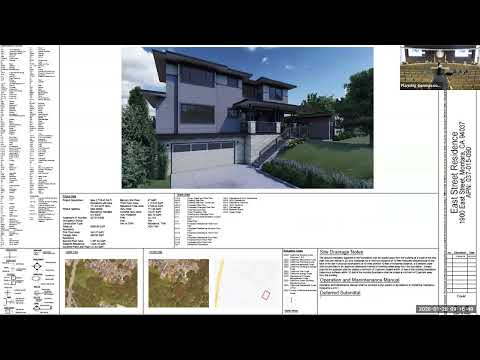
Olivia Boo, the county project planner, told the commission the application (PLN2014‑00490) would adopt an initial study and mitigated negative declaration and approve a design review permit, coastal development permit and grading permit for a three‑story house with an attached garage, an accessory dwelling unit, removal of 19 trees and road improvements. Boo said staff recommended denying the appeal and upholding the director’s May 2025 decision.
Neighbors and appellants pressed a different case. "This project violates at least five of the requirements for fire vehicle access," appellant spokesperson said during public comment, listing concerns about road slope, hammerhead turnaround grades and minimum width. Appellants also argued the project would trench utilities and place grading within the root zone of a large Monterey cypress they called "tree number 5," increasing the risk that the tree would fail and damage the downslope home.
Project consultant arborist Roy Leggett defended the tree protection plan, telling the commission it follows industry standards and includes the use of an air spade and on‑site arborist monitoring to avoid severing structural roots. "It's not a cutting tool," Leggett said, describing the air spade as a means to displace soil without damaging fine roots. Appellants countered that the combination of excavation, new utilities and fill could nonetheless destabilize the tree over years and that independent arborist Ned Patchett’s analysis supports a 39.5‑foot tree protection radius.
County arborist Natalie Krug told commissioners the review was completed under the earlier "significant tree" ordinance (the project predates the November 2024 protected‑tree ordinance) and that the project's tree‑management specifications exceed minimum requirements. Coastside Fire representative Tyler explained the fire district provides planning‑stage comments that are incorporated as conditions and will perform more detailed review at the building‑permit stage.
Commissioners focused on two practical gaps: (1) a lack of an engineering plan quantified to show how much of the tree protection zone would be disturbed and (2) uncertainty about whether road and turnaround grades would meet fire standards without additional redesign. One commissioner estimated that roughly 25–30% of the tree protection zone would be affected by the current turnaround alignment.
Commissioner Nugent moved to continue the appeal to a date uncertain to allow the applicant to submit revised project plans that: show the drip line of the adjacent Monterey cypress on the plans, quantify the square footage and percentage of the drip‑line area that would be disturbed, and propose alternatives reducing TPZ impacts. The motion, seconded by Commissioner Garcia, passed 4–0.
The continuance means staff and the applicant can refine road alignment, utility routing and protective measures, and the commission will review the resubmitted plans before taking a final vote. The commission’s deliberations emphasized that while building permits remain subject to iterative review by the fire district and other agencies, the current record does not contain the specific plan details commissioners said they needed to make a final finding.
Action and next steps: The commission voted to continue the appeal to allow the applicant to deliver revised plans and supporting analysis; staff will schedule the item for a future hearing once the submittal is complete.