Lifetime Citizen Portal Access — AI Briefings, Alerts & Unlimited Follows
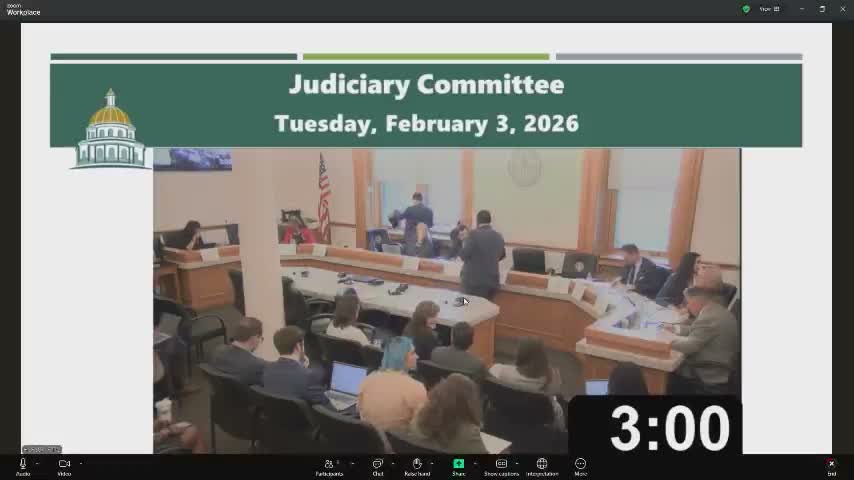
Committee hears bill to apply county jail standards to municipal jails, add protections for pregnant people
Loading...
Summary
Sponsors said HB 10‑39 would close an oversight gap by requiring municipal facilities that hold people post‑conviction to meet county jail standards and reporting rules; witnesses urged targeted amendments, and sponsors laid the bill over for action next week.
Vice Chair Carter and Rep. Ricks told the House Judiciary Committee HB 10‑39 is meant to close an oversight gap for municipal detention facilities that effectively operate as jails.
"The only purpose of this bill is to add that extra layer of protection, when it comes to, holding someone post conviction or holding someone past that 24, 48, or 72 hours," Vice Chair Carter said, explaining the measure would extend existing county jail standards and reporting requirements to municipalities that choose to operate jails.
Rep. Ricks, co‑prime sponsor, told members the bill would "bring municipal jails in alignment with the county jail standards," and would limit municipal holds to 72 consecutive hours unless a person is serving a municipal sentence. He said the measure is intended to address a single municipality that currently holds people beyond short‑term detention.
Why it matters: Sponsors framed the bill as parity and public‑safety legislation. They said county jails already follow a set of standards (medical staffing, recreation, visitation spaces and data reporting) and that municipalities that opt to detain people for post‑conviction terms should meet the same requirements. Sponsors singled out Aurora as the only municipality currently operating a facility that holds people post‑conviction and said the bill would not affect temporary holding cells used only for short transport.
Witnesses and concerns: Owen Brigner of the Colorado Municipal League asked for amendments that add a non‑voting municipal representative to the jail standards advisory committee and for a clear municipal‑jail definition so temporary holding cells are not swept into the statute. Brigner also raised concern about a provision that would require the release of a person in active labor on a personal recognizance bond without conditions, calling it a parity question.
Elizabeth Cadiz, chief public defender in Aurora (testifying as an individual), said she supports the aim of consistent standards but expressed uncertainty about when full jail standards would apply — noting that many of the protections (in‑person counsel access, visitation space, showers) are currently most relevant within 48 hours.
Advocacy groups including the Colorado Freedom Fund and the ACLU of Colorado supported the bill’s transparency and equality goals. Dana Steiner (Colorado Freedom Fund) said the Aurora facility detains about 60 people daily and has a bed capacity of roughly 220 — raising the stakes for consistent reporting and oversight. Ariane Frosh of the ACLU emphasized protections for pregnant people and said municipal detention in active labor should be an exception only when safe transport to medical care is infeasible.
What the committee did: At the sponsors’ request, the committee laid HB 10‑39 over for action only and scheduled amendments and a vote for a future meeting. No final action or vote on the bill occurred at this hearing.
Next steps: Sponsors said they will continue stakeholder talks, draft amendments (including clarifications on municipal representation on advisory bodies and the 48 v. 72‑hour threshold), and return with language for committee action.