Citizen Portal
Sign In

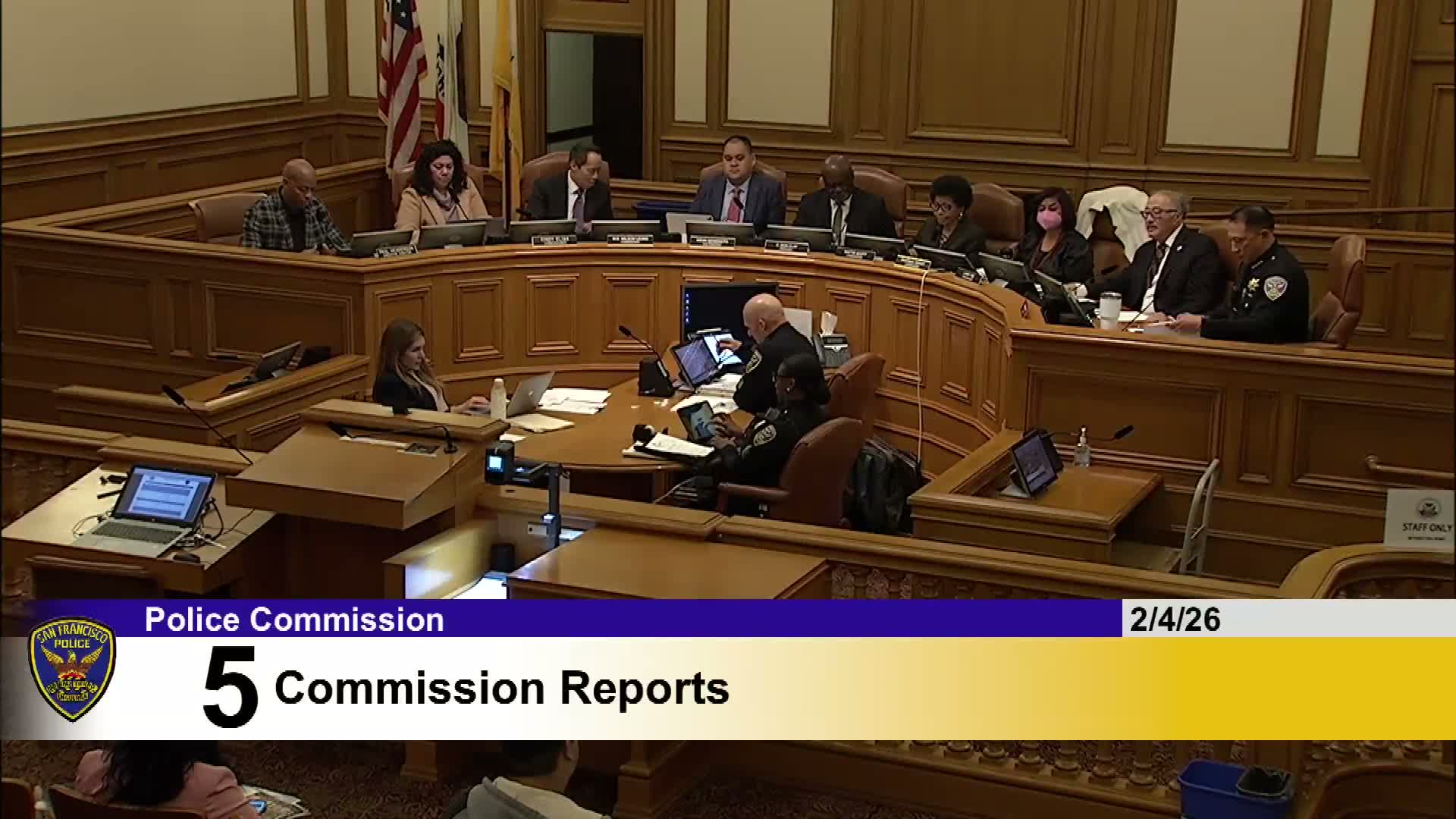
Police Commission tables DGO 5.20 language-access rewrite after community objections

San Francisco Police Commission · February 4, 2026

Loading...

AI-Generated Content: All content on this page was generated by AI to highlight key points from the meeting. For complete details and context, we recommend watching the full video. so we can fix them.

Summary

After hours of public testimony and commissioner debate, the San Francisco Police Commission voted to table proposed revisions to DGO 5.20 (language access) and directed SFPD to meet with the Language Access Network and return with a revised draft in mid‑April.

The San Francisco Police Commission voted unanimously on Feb. 5, 2026 to table proposed revisions to Department General Order 5.20, the SFPD language-access policy, after extensive public testimony from immigrant‑serving organizations and sustained questioning from commissioners.

President Clay, presiding over the meeting, framed the issue as one of trust in the policy process: “A system without trust is no system at all,” he said, arguing the commission must ensure community participants see their input reflected in the final policy.

The draft before the commission would have updated DGO 5.20 to align reporting with San Francisco Administrative Code Chapter 91, expand periodic training to all public‑facing employees and permit certain temporary interpreters in exigent, non‑criminal circumstances. SFPD policy manager Aja Steves walked commissioners through two specific proposed wording edits — replacing “primary or preferred language” with “primary language” for Miranda admonitions and changing an “or” to an “if” in the exigent‑circumstances provision — and demonstrated tools officers would use, such as a language‑indicator app and a prototype visor card for drivers.

Community groups, however, said the version before the commission weakened protections the working group had agreed on. Anisha Hingrani of Chinese for Affirmative Action, who served on the working group that produced the February 2025 draft, said the department’s version “removes whole sections and waters down language we had already discussed.” Millie Atkinson of the Immigrant Legal Defense Program told commissioners the working‑group product had been based on best practices and that the department’s draft “would create additional barriers for our immigrant community.” Multiple speakers urged the commission to adopt the working‑group draft rather than the department’s version.

Commissioners pressed SFPD on process and clarity. Commissioner Elias asked whether the human‑trafficking increase cited in the chief’s report included labor trafficking and requested a follow‑up; Commissioner Yee raised questions about dialect accuracy and whether translations would be available in written characters. Steves said SFPD uses certified vendor interpreters (LanguageLine and similar services), not AI, and that it can request dialect‑specific written translations when needed.

Vice President Benedikto moved to table the DGO, direct SFPD to meet with members of the Language Access Network and consider restoring elements of the working‑group draft, and to return the item to the commission no earlier than the first meeting in April. The motion was seconded and passed on a roll‑call vote of seven in favor.

What the commission asked for and what comes next

The commission directed SFPD to: meet with the Language Access Network and community working‑group members; document and publish the department’s responses to working‑group recommendations (the department already maintains a public grid of changes); and bring a revised draft back to the commission for consideration in mid‑April. Commissioners suggested additional outreach measures — for example, bilingual nameplates or pins for certified bilingual officers — that could make language capacity more visible to the public.

Legal and policy context

Speakers and staff repeatedly invoked three legal frameworks cited by SFPD staff: Title VI of the Civil Rights Act of 1964 (federal nondiscrimination in federally funded programs), the Dymally‑Alatorre Bilingual Services Act (California), and San Francisco Administrative Code Chapter 91 (local language‑access rules). The commission’s motion did not change those statutory obligations; it directed further community engagement to reconcile the working‑group draft with the department’s operational and legal constraints.

The immediate practical outcome is procedural: the commission did not advance or adopt the draft. Commissioners and dozens of community speakers said they welcome further deliberation; the department said it will meet with community partners and return with revisions and explanations for any remaining differences.

The commission is scheduled to revisit the item in mid‑April, with a timeline intended to allow additional community consultation and technical revisions by SFPD.