Panel backs study commission instead of strict 7‑day transfer mandate for Title 15 placements
Loading...
Summary
After testimony from disability advocates, clinicians and hospital staff, the committee amended a Title 15 bill to emphasize a legislative commission to study placement and transfer processes rather than imposing a rigid 7‑day statutory transfer deadline.
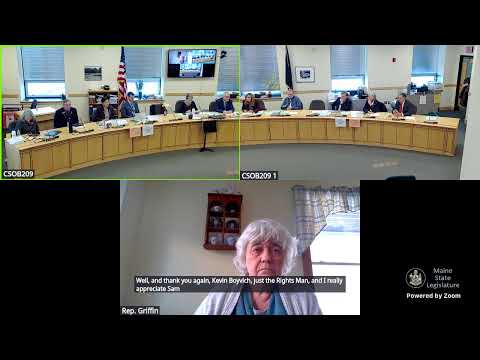
The Health and Human Services Committee spent its afternoon work session on an amended Title 15 bill that would change how individuals subject to competency evaluations and restoration orders are transferred to DHHS custody.
Analyst Sam Seneff summarized the amendment’s two main components: (1) a subset of defendants deemed to present a likelihood of serious harm would be prioritized for transfer, with a proposed 7‑day transfer timeline in the draft amendment; and (2) creation of a legislative study (commission) to examine systemic placement, triage and restoration processes.
Kevin Voyvovich of Disability Rights Maine said the amendment aims to create clear communication and transfer plans among stakeholders and emphasized the need to prioritize the most acute cases while recognizing operational constraints. Committee members pressed repeatedly on what ‘‘promptly’’ or a 7‑day standard would mean in practice.
Clinicians described the practical constraints that complicate a rigid statutory deadline. Dr. Dan Potenza, clinical director at Dorothy [redacted] Psychiatric Center, explained that Title 15 brings ‘‘everybody independent of the illness’’ into the admissions pipeline — including people with dementia, intellectual disability and neurologic disorders — and that some individuals cannot be treated without consent or a separate court process. Dr. Sarah Miller, director of the state forensic service, described the standard admissions workflow: court clerks forward orders, the forensic office triages within one business day and hospital admissions teams request complete documentation before placement.
Members cited experience in other states. The committee heard that Washington state’s statutory 7‑day requirement did not guarantee faster placements and led to substantial costs when the state failed to meet the standard. Lawmakers and clinicians agreed a working group or commission could better balance constitutional restoration rights, clinical suitability and capacity limits than a single statutory deadline.
The committee amended the bill to remove the forced timeframes and focus on creating a commission with specified stakeholders (including hospital and forensic representation, defense and prosecution representation, and persons with lived experience). The panel also agreed to a technical clarification that the existing 30‑day placement standard applies to both evaluation (subsection 4) and incompetent-to-stand-trial (subsection 5) cases. The amended motion was seconded and approved by voice vote.