Health committee backs $1M non‑lapsing emergency fund to shore up children’s residential care
Loading...
Summary
The Health and Human Services Committee amended LD 2125 to remove emergency rate‑determination language and advance a $1,000,000 non‑lapsing fund to stabilize children’s residential treatment providers facing closures and staffing shortages.
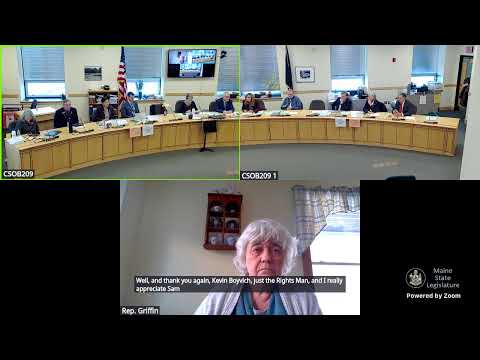
The Joint Standing Committee on Health and Human Services on Feb. 5 amended and advanced LD 2125, a bill to create an emergency sustainability fund to prevent closures at children's residential treatment facilities.
Analyst Anna Broom told the committee the bill would establish a one‑time $1,000,000 appropriation in fiscal year 2025–26 to stabilize Appendix D children’s residential providers she said are ‘‘in danger of closing a facility or closing beds in a facility.’’ She also summarized arguments that reimbursements — particularly room‑and‑board rates — lag current operating costs and that staffing turnover and accreditation costs have strained provider finances.
Supporters urged quick action to avoid children remaining in hospital emergency rooms or being placed out of state. Representative Sam Zager said the Government Evaluation Act and oversight ‘‘are mechanisms for this committee to do oversight’’ and argued the fund could provide immediate relief while systemic rate setting proceeds.
Some committee members urged caution over the dollar amount. Representative Lucian Daigle said he worried that asking for $2,000,000 could jeopardize getting at least $1,000,000, urging the panel to ‘‘stop the bleed’’ first. Other members, including Representative Michelle Meyer and Representative Annie Graham, said $1,000,000 may not be sufficient and discussed proposing an amendment to increase the amount.
The committee also heard that of the 152 licensed beds identified for Appendix D providers, roughly 22 were reported vacant because facilities lacked staff. Broom noted the distinction between licensed beds and staffed/occupied beds and cautioned that a single, non‑recurring appropriation raises timing and distribution challenges; the governor’s department had signaled concern about the burdens an emergency rate‑determination process would place on staff.
After debate, a motion was made to pass LD 2125 as amended by removing the bill’s section that would require an emergency rate determination, to retain a $1,000,000 appropriation, and to make the fund non‑lapsing. Committee members confirmed DHHS staff said the department could administer distribution without more detailed bill language. The committee approved the amendment by voice vote and recessed until its afternoon session.
The amendment advances the appropriation while removing the immediate statutory requirement for a rushed emergency rate study; members left open further work on rate‑setting and systemic fixes.