Get Full Government Meeting Transcripts, Videos, & Alerts Forever!
Get email alerts on the Planning Votes topic
No spam. Unsubscribe anytime.
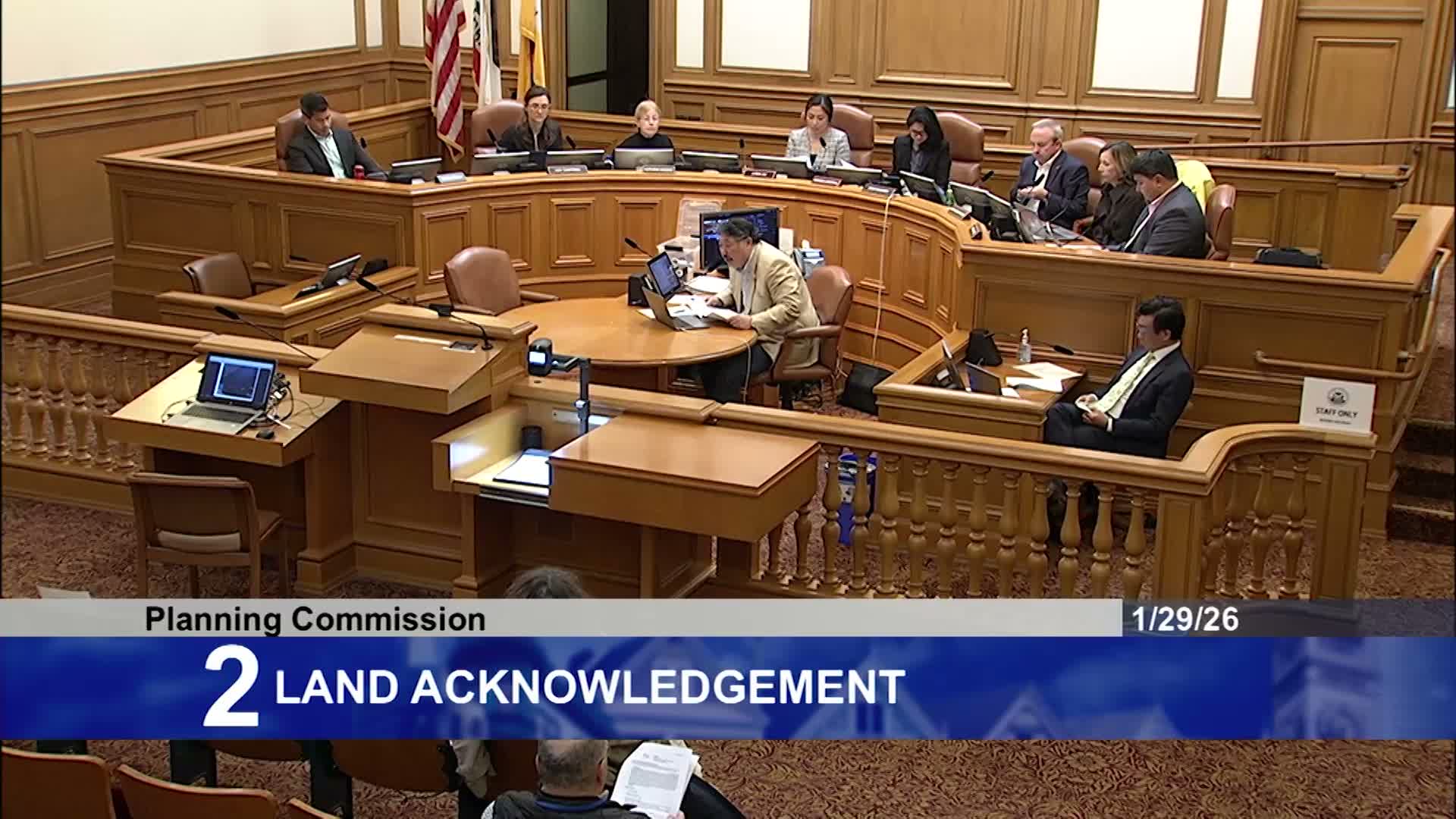
San Francisco Planning Commission: key votes, Jan. 29, 2026
Summary
The Planning Commission on Jan. 29, 2026 approved minutes and elected officers, approved redevelopment and housing projects across several neighborhoods, and denied one conditional use request to remove a verified dwelling unit; most measures passed unanimously.
The San Francisco Planning Commission met Jan. 29 and moved through administrative business, public comment on housing-policy implementation, and a full docket of land-use items.
The commission unanimously adopted the draft minutes of Jan. 15, 2026, and elected Commissioner Campbell as president and Commissioner Moore as vice president. Director Dennis Phillips gave department updates and said the Planning Department will return Feb. 12 with a budget briefing and details on permit-center unification.
On project votes, commissioners approved a package of zoning and project-specific actions: they adopted the proposed code and map amendments and granted conditional use authorization to redevelop the Holocaust Center at 2245–2255 Post Street (the Planning Department recommended approval); they approved a new two‑unit project at 61 Royal Lane after staff analysis found the proposal met objective standards; they declined discretionary review and approved a vertical addition at 49 Chula Lane (a historic-district‑adjacent key lot); and they approved plans for rear decks at 727 Madrid Street after finding no exceptional circumstances. All those approvals passed by unanimous votes where recorded.
The commission voted 5–1 to deny a request at 1732 Terravel Street to remove a dwelling unit and convert that space to commercial use. Planning staff had recommended denial, citing a 2017 enforcement investigation and a 2019 permit that aimed to restore the unit; several commissioners said maintaining housing stock drove their decision. Commissioner Braun moved to deny the application and Commissioner Imperial seconded; Commissioner Campbell voted against denial.
Most votes included conditions of approval requiring subsequent agency review where appropriate (for example, DBI and Fire Department life‑safety checks on projects affecting narrow lanes). Where projects relied on the Housing Accountability Act or state ADU rules, commissioners noted those state constraints limited discretionary changes.
The hearing closed after approval of the final discretionary-review items and the zoning administrator signaled intent to grant standard conditions for a connected variance.