Get Full Government Meeting Transcripts, Videos, & Alerts Forever!
Get email alerts on the Housing topic
No spam. Unsubscribe anytime.
Commissioners debate short‑term rentals and housing mix as data show fewer school‑aged residents
Summary
Commissioners discussed how short‑term rentals, investor ownership and an aging population shape housing supply and school enrollment; staff said code enforcement used new software and estimated about 19,000 nightly‑rental beds countywide.
Housing dominated a large part of the Jan. 27 work session as commissioners probed how the county’s housing stock — including short‑term rentals and investment properties — affects long‑term community composition.
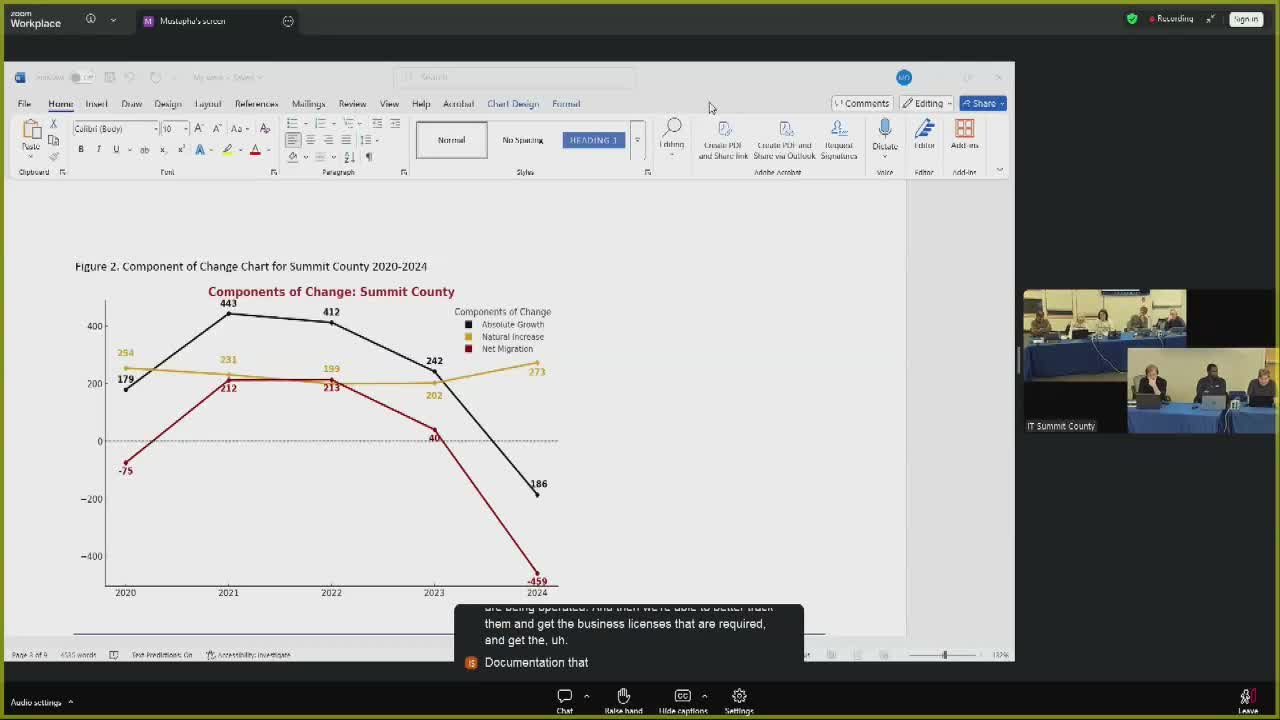
Commissioner 2 asked whether the county wants to attract families and pointed to charts showing declining school enrollment. Director and staff cautioned that data alone do not reveal causes; they stressed that what the county allows to be built shapes future demographics. "What you build, you will get," Commissioner 7 said, urging visualization of alternative outcomes tied to different development choices.
Staff and commissioners also discussed short‑term rentals. Ray said the county’s code enforcement team has implemented software to track nightly rentals and that staff member Scott estimated about "19,000 beds that are currently being used as a nightly rental" within the county. Commissioners debated the trade‑offs: nightly rentals generate tax revenue and can help owners afford mortgages, but high proportions of non‑permanent units can hollow out neighborhood life and distort housing stock available to year‑round residents.
Staff noted the county already prohibits nightly rentals for accessory apartments following a recent update to accessory‑apartment regulations; other potential tools — overlay zones, targeted rezones with tenure or use restrictions, and clearer definitions for recreational or hotel‑style units — were raised as policy options to explore.
Next steps: staff plans to involve housing subject matter experts (Jeff, Maddie and other housing staff were referenced) in upcoming sessions and promised more detailed data analysis and potential regulatory options for commissioners to consider.