Get Full Government Meeting Transcripts, Videos, & Alerts Forever!
SFMTA outlines worst‑case plan: up to 20 routes cut, night service trimmed and thousands of layoffs if measures fail
Summary
Staff warned that failure of one or both ballot measures could force deep service reductions (up to about 20 routes), earlier system closing hours, cuts to historic lines (cable cars, F line), and staff layoffs: about 700–900 positions if one measure fails and more than 2,000 if both fail.
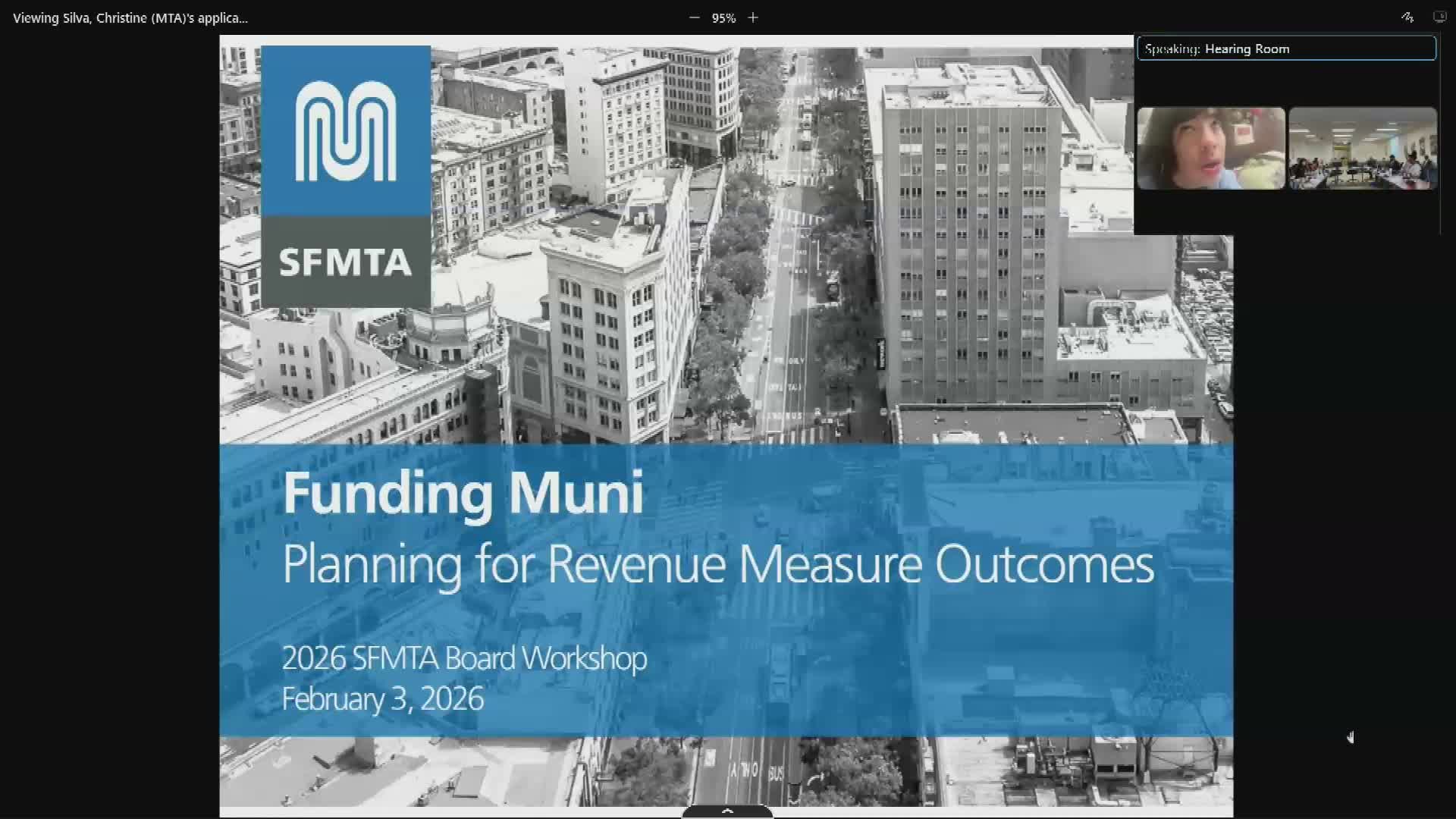
SFMTA staff presented a contingency 'what‑if' plan detailing the operational and workforce consequences should the proposed regional and local revenue measures not be approved by voters.
Julie Kirschbaum (presenting the contingency scenarios) told the board the agency would first seek to avoid preemptive service cuts, but that staff must prepare immediately to implement rapid changes if election results are unfavorable. "If one or both of the measures don't pass, we would be looking at some pretty…
Already have an account? Log in
Subscribe to keep reading
Unlock the rest of this article — and every article on Citizen Portal.
- Unlimited articles
- AI-powered breakdowns of topics, speakers, decisions, and budgets
- Instant alerts when your location has a new meeting
- Follow topics and more locations
- 1,000 AI Insights / month, plus AI Chat