
Heated testimony in Annapolis as Maryland sponsor presses bill reserving girls' varsity sports and locker rooms by sex
Get AI-powered insights, summaries, and transcripts
Subscribe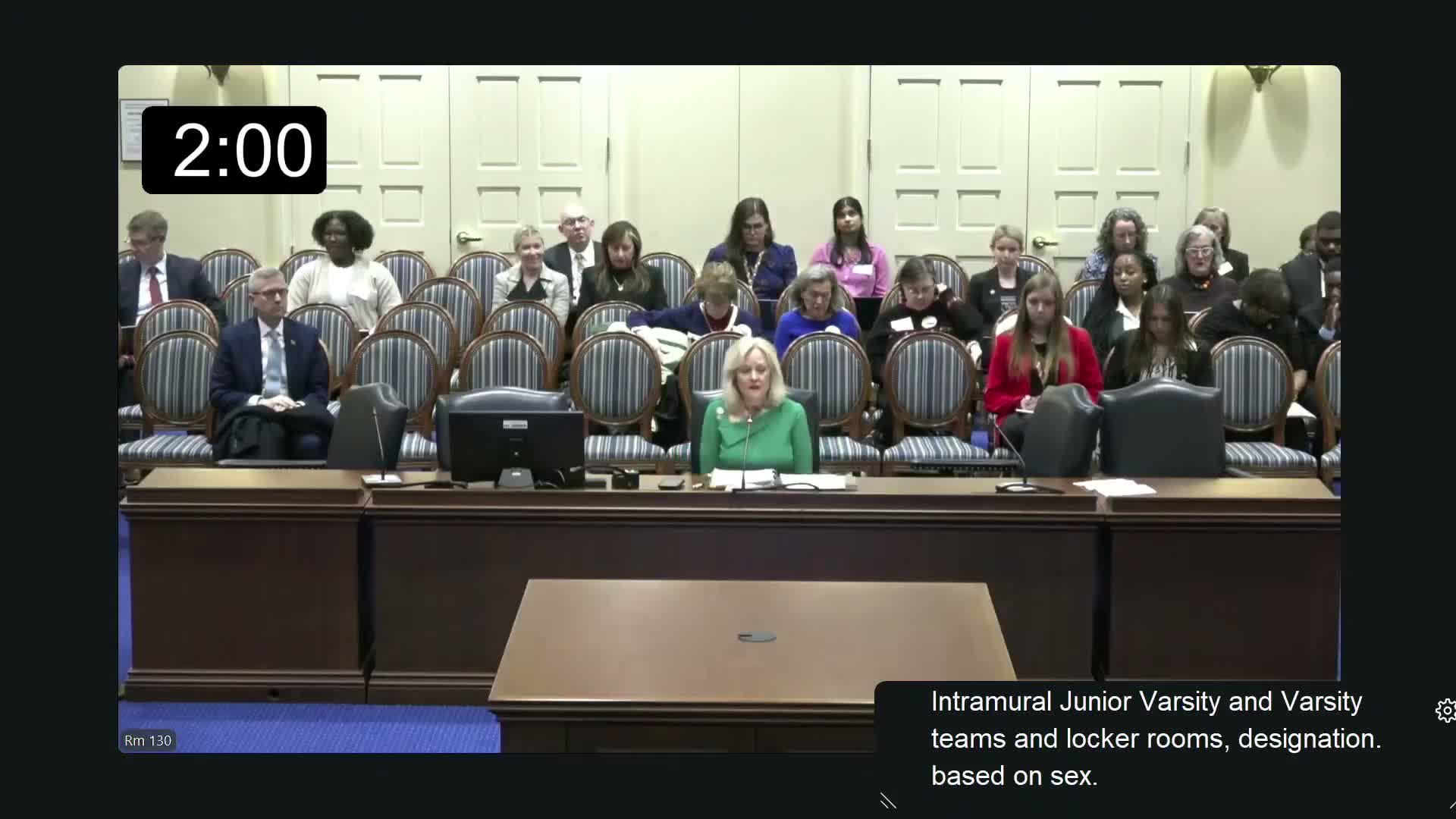
Summary
Sponsor Delegate Kathy Shalaga presented HB63 proposing biological‑sex definitions for girls' varsity/JV sports and locker rooms. Supporters cited competitive fairness and safety; many committee members pressed for peer‑reviewed evidence, legal analysis, and implementation details on forms and privacy.
Delegate Kathy Shalaga opened testimony on House Bill 63, the ‘fairness in girls sports’ proposal, arguing it would reserve varsity and junior‑varsity girls’ competitions and locker rooms for biological girls and preserve opportunities for female athletes. Shalaga described the bill as ‘simple’ and repeatedly framed it as protecting competitive fairness and safety.
During a sustained question-and-answer period, multiple delegates — including Delegate Polakovich Carr (a scientist by training), Delegate Ebersole and others — pressed the sponsor for peer‑reviewed evidence and specific Maryland examples showing competitive displacement or safety harms. Delegate Polakovich Carr cited a recent systematic review in the British Journal of Sports Medicine that found higher lean mass but no consistent differences in strength or VO2 max for transgender women after 1–3 years of gender‑affirming hormone therapy; she asked whether the sponsor disputed those peer‑reviewed findings.
Shalaga and supporters pointed to anecdotal incidents in other states and international examples, and to concerns about physical mismatches in some sports; they also said enforcement would rely on existing private health/physical forms held by schools and argued the bill would be implemented with dignity and privacy. Opponents and several delegates raised questions about Title IX, the Maryland anti‑discrimination statute and potential litigation risk, as well as whether the bill would exclude transgender girls from participation or create legal exposure for school systems.
No committee decision was recorded; lawmakers asked for additional legal analysis and clarification of drafting and enforcement mechanisms, including how schools would handle disputed eligibility and how the bill would intersect with federal guidance.