Get Full Government Meeting Transcripts, Videos, & Alerts Forever!
Get email alerts on the Surveillance Privacy topic
No spam. Unsubscribe anytime.
Residents urge removal of Flock vehicle‑tracking cameras, cite privacy and data‑security risks
Summary
Several residents urged the Moline City Council to suspend or cancel the city's contract with Flock Safety, citing petitions, alleged data exposures and concerns that vendor data sharing could allow federal access in violation of Illinois law.
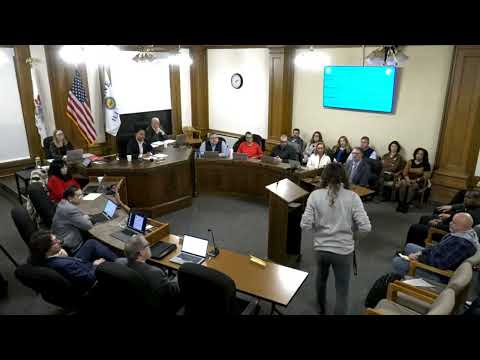
Several Moline residents used public comment on Feb. 3 to press the City Council to pause or cancel the city’s contract with Flock Safety, the private vendor the city uses for vehicle‑tracking cameras.
David Soner, who identified himself as a fourth‑ward resident, said he returned to council with an updated petition of 425 signatures from Quad Cities residents asking for removal of the cameras. Soner said the city’s website lists nine Flock cameras and that, according to the website, those cameras “are logging over 4,000,000 records a month.” He added that recent reporting and audits show vendor data can be exposed and asserted that the Illinois Secretary of State’s office found Flock was sharing information with federal agencies in ways he characterized as “a direct violation of Illinois state law, the TRUST Act.”
“Even if our officers perfectly follow procedures … we’re relying on a private vendor to keep that data safe. And frankly, the trust has already been broken,” Soner said.
Other speakers echoed concerns. Cal Bow told the council that more cameras do not necessarily equal more safety, called out subscription pricing and vendor accountability, and questioned whether surveillance disproportionately affects lower‑income residents. Brady Green and other commenters warned of mission creep — the expansion of surveillance uses beyond initial stated purposes — and urged the council not to prioritize convenience over privacy.
Council members did not take an action to cancel or amend the city’s camera contract during the meeting. No city official in the meeting record offered a substantive rebuttal to the claims about the vendor’s practices or the specific audit findings quoted by speakers. Council members acknowledged receipt of the petitions and public concerns and indicated staff follow‑up could be arranged outside public comment.
What happens next: Council did not vote on the contract or a moratorium at the Feb. 3 meeting. Commenters asked staff and elected officials to return with clarifying information, and several council members indicated they would consider follow‑up communications and potential regulatory or contract clarifications.