
Seattle schools face large budget shortfall; superintendent urges 'put schools first' reallocation and vacancy strategy
Get AI-powered insights, summaries, and transcripts
Subscribe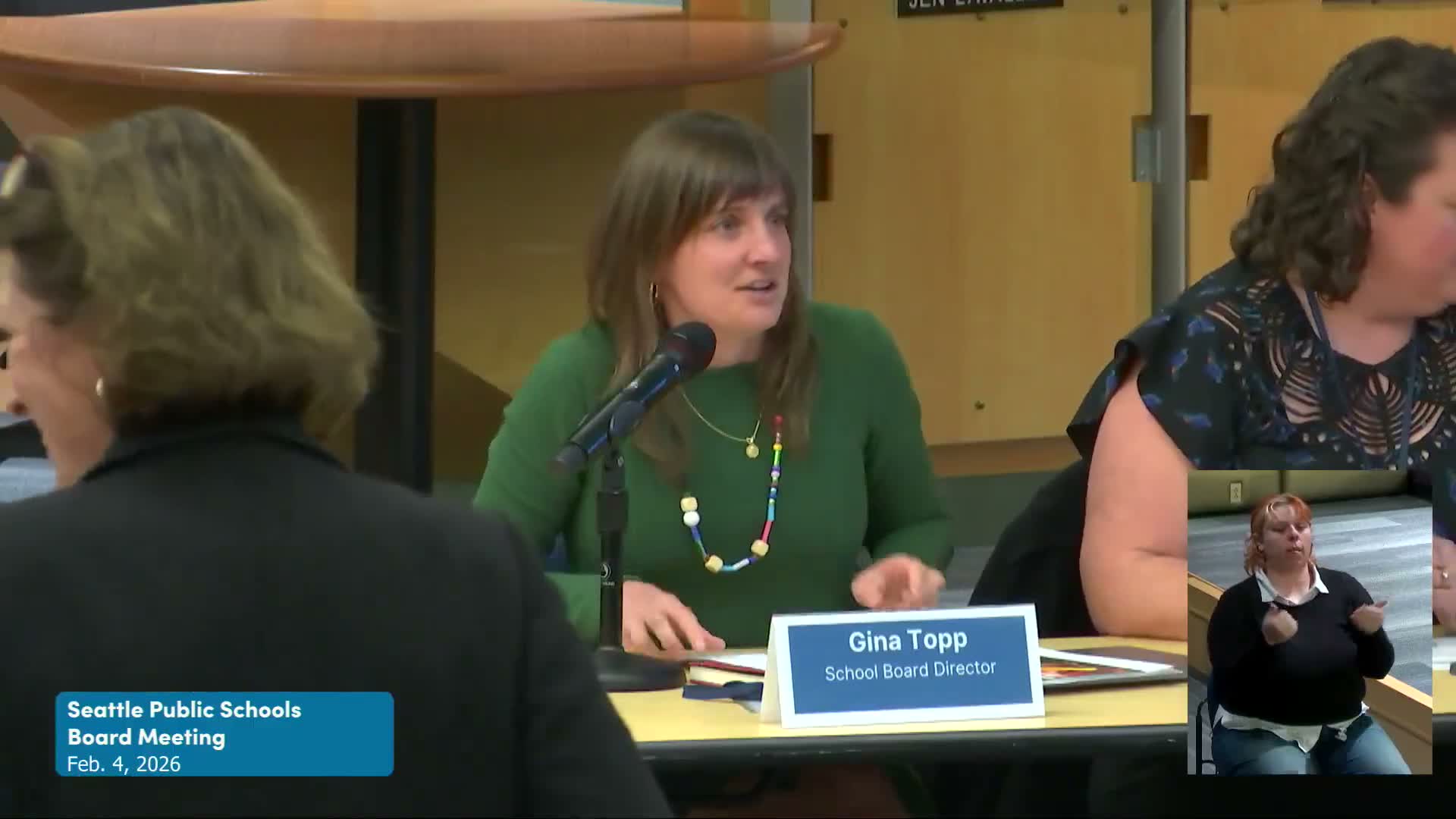
Summary
Superintendent Scholdner told the board the district faces a multi‑year structural shortfall (staff discussed an $87M figure if no changes are made); he proposed prioritizing school funding, harvesting vacant positions, reviewing facilities and considering a multi‑year remediation plan while urging caution about layoffs.
Board members continued the meeting with the second part of a scheduled budget study session, where district leadership described a significant projected shortfall and outlined initial strategies to reduce it without immediate mass layoffs.
Superintendent Scholdner described early findings after school visits and a review of budget structure. "We are in a lot of trouble," he said, citing broad deficit figures discussed in the presentation and among staff. He urged a budgeting approach that funds schools first and then allocates remaining funds to central offices. "Build what we have that we need for schools, and then what's ever left is what comes to this office," he said.
Staff cited a current district fund balance of about $97 million and described a scenario in which roughly $87–89 million would be drawn from reserves if the district continued on the current trajectory without additional changes. Chief operating officer Kurt Podesta and staff explained that a multi‑year hiring freeze and executive review of refill requests (vacancy harvesting) have been in effect and can be leveraged to reduce the shortfall further in a structured way rather than through ad‑hoc cuts.
Directors asked pointed questions about the fund balance, the size and timing of projected draws, and the district's contingency plans. Director Mizrahi pressed staff for a clear projection of the fund balance on September 1; staff said monthly financial reports and proposed budget amendments will be presented more frequently so the board can monitor erosion of reserves and the impact of corrective actions.
Board members suggested cost‑saving and revenue‑generating ideas that would not directly harm classroom instruction: having central office instructional staff spend more time in schools, reviewing district‑owned buildings that are unused or underused, and reducing redundant leased space. "Do we need this giant building at that point?" Vice President Briggs asked, proposing asset reviews and potential rentals as part of a suite of 'win‑win' options.
Staff cautioned there are no easy answers and that structural changes likely in the 8–10% range of the budget will be required to stabilize finances over multiple years. Scholdner emphasized workforce management strategies such as not backfilling every vacant position and examining organizational redundancy; he also said the district will continue to seek revenue (including continued city and levy support) but cannot rely on it.
No formal actions or votes were taken at the meeting. Directors asked staff to return with (a) more frequent budget amendment updates and monthly trend analyses of the fund balance, (b) a clearer list of potential structural reductions and their likely timelines and impacts, and (c) options for scaling promising student supports without exacerbating the fiscal gap.
The meeting closed with an announcement of upcoming school tours and community meetings the superintendent will hold; the board adjourned at 6:38 p.m.