Get Full Government Meeting Transcripts, Videos, & Alerts Forever!
Get email alerts on the Israel Palestine Crisis topic
No spam. Unsubscribe anytime.
U.N. briefing details heavy civilian toll in Gaza, calls for hostages’ release and immediate ceasefire
Summary
A council briefing reported thousands of Palestinian casualties, widespread damage to hospitals and infrastructure, disruptions to aid, and hostage-taking since Oct. 7; the speaker urged release of hostages, unimpeded humanitarian access and a sustained ceasefire.
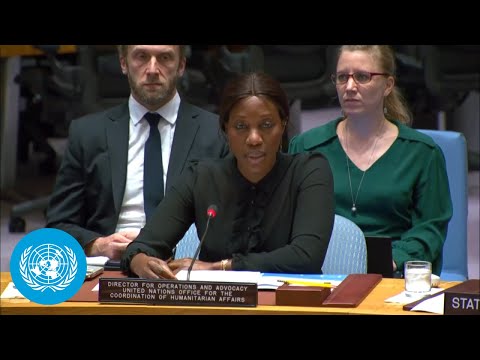
Unidentified Speaker (S1) told the Security Council on Aug. 29 that Gaza and the West Bank are facing catastrophic humanitarian conditions and urged immediate action to protect civilians and restore aid access. The briefing, given alongside Under-Secretary-General DiCarlo (as referenced in the update), outlined casualty figures, disruptions to health and water services, attacks on humanitarian workers, and intensified operations in the northern West Bank.
The speaker opened by reaffirming "the equal value of every human life" and summarized the purpose of international humanitarian law as limiting the consequences of war and protecting people who are not fighting. The briefing said more than 1,000 people were taken hostage on Oct. 7 and stated an estimated 1,011 Israeli and foreign nationals remain held in Gaza, adding that access to those hostages by the International Committee of the Red Cross has been refused.
Citing Gaza Ministry of Health figures, the speaker said "more than 40,000 people" have been killed and about 93,000 injured, with over half of the injured women and children. The briefing attributed much of the death and devastation to the use of heavy weapons in densely populated areas, including camps and shelters, and reported roughly 295 humanitarian workers killed since Oct. 7. The speaker also said attacks have hit U.N. vehicles in more than a dozen incidents since January and noted the World Food Programme temporarily suspended staff movements after a convoy was hit on 28 August.
On public health, the speaker welcomed local humanitarian pauses that enabled the launch of an emergency polio vaccination campaign and said "over 187,000 children under the age of 10 have been vaccinated in the first phase" toward a target of more than 640,000. The briefing also said water infrastructure damage had reduced supplies to about a quarter of pre-October 2023 levels, and that 19 of Gaza’s 36 hospitals were out of service.
The speaker warned that "There is no safe place for civilians in Gaza," noting repeated evacuation orders, reduced food rations (with wheat flour excluded from general rations and prioritized for 14 bakeries supported by humanitarian actors), and that roughly 96% of the population face high levels of acute food insecurity. The update said humanitarian organizations were responding in some West Bank localities such as Tulkarm but were denied access for assessments in Jenin, and confirmed that "over two dozen" Palestinians were killed and hundreds of families displaced during recent operations in the northern West Bank.
The briefing closed with a call for the immediate release of hostages, unimpeded humanitarian access, adherence to international humanitarian and human rights law, and "an immediate cessation of hostilities and a sustained ceasefire in Gaza." The speaker urged council members and all states to use diplomatic influence and to pursue accountability to end the suffering.
The council received the update; no votes or formal actions were recorded in the transcript.