Get Full Government Meeting Transcripts, Videos, & Alerts Forever!
Get email alerts on the Israel Palestine Crisis topic
No spam. Unsubscribe anytime.
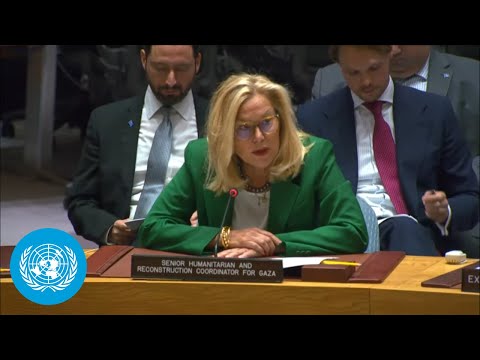
UN Representative Sigrid Khan urges immediate ceasefire, humanitarian access for Gaza
Summary
Sigrid Khan urged an immediate ceasefire, unconditional release of hostages, and unimpeded humanitarian access to Gaza, described large numbers of civilian casualties and injuries, highlighted a polio outbreak and recent medical evacuations, and called for a political two‑state solution and reconstruction planning.
Sigrid Khan delivered a sober appeal to the assembly, urging an immediate ceasefire, the immediate and unconditional release of all hostages held in Gaza, and "unimpeded continuous humanitarian access" to deliver aid at scale across the Gaza Strip.
Khan said nearly a year after the October 7 attack "1,250 Israeli and foreign lives" were lost and "around 250 hostages" were taken, with roughly "101 hostages" reported still alive and denied humanitarian visits. She demanded that hostages be treated humanely and allowed access to the International Committee of the Red Cross.
Why it matters: Khan portrayed the situation in Gaza as a deepening humanitarian catastrophe, citing more than "41,000 Palestinians" killed and "over 93,000" injured. She cited World Health Organization figures that more than "22,000 people have sustained life‑altering injuries," including severe limb injuries often resulting in amputation, and said Gaza’s health infrastructure has been decimated.
Khan emphasized public‑health setbacks, reporting the reappearance of polio in Gaza and saying the first round of a two‑round vaccination campaign led by the World Health Organization, UNRWA and UNICEF "has successfully been completed," with a second round to start in approximately four weeks. She said agreed pauses in fighting have sometimes allowed parents and children to reach health centers, and used that as evidence that humanitarian action is possible when political will and operational coordination exist.
On logistics and operations, Khan said her mission has negotiated and strengthened supply lines and routes to facilitate a sustained flow of supplies into Gaza — including routes via Egypt, Jordan, Cyprus, the West Bank and Israel — but warned that systems alone "are not a substitute for the political will required to reach civilians." She noted that a joint coordination board is operational but said recent security incidents, "including shootings at humanitarian convoys," demonstrate agreed protocols still need full implementation.
Khan pointed to recent evacuations and medical needs, saying the largest medical evacuation to date went to the United Arab Emirates and that "over 14,000 patients require specialized treatment outside of the Gaza Strip," calling on member states to host patients and family members. She also said UN teams are coordinating on a winterization plan as winter approaches.
Looking beyond immediate relief, Khan said humanitarian assistance is only a temporary measure and reiterated that a comprehensive, lasting peace requires a two‑state solution leading to an independent, viable Palestinian state living side‑by‑side in peace and security with Israel. She urged that reconstruction of Gaza begin without delay, that governance and security arrangements be restored, and that the Palestinian Authority and Prime Minister Mohammed Mustafa’s cabinet be enabled to resume full responsibilities in Gaza.
Khan concluded by urging international solidarity, continued coordination among UN agencies and partners including UNRWA and UNOPS, and the translation of commitments into concrete actions on the ground: "Any delay in implementation comes at direct cost of human lives."