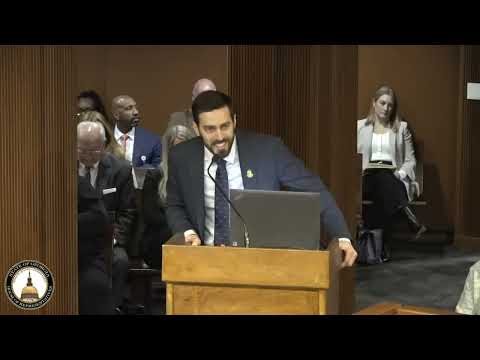
Committee approves rules for ketamine and psychedelic treatment clinics, adds grandfathering and ownership limits
Loading...
Summary
The committee passed House Bill 717 to license and regulate psychedelic-assisted treatment clinics (including ketamine), requiring medical monitoring, two-hour post-treatment observation and emergency equipment; the substitute includes grandfathering for existing clinics and ownership limits requiring physician majority or physician–CRNA partnerships for new clinics.
Chair introduced the substitute to House Bill 717 and invited the Georgia Composite Medical Board to present. Kimberly, deputy executive director and legal officer for the Board, said the board formed an ad hoc ketamine committee after public and physician concern about new clinics that operate without consistent safeguards. The proposed statute would license clinics, set parameters for safe prescribing, administration and post-treatment monitoring for psychedelic-assisted treatments, and require registration with the Composite Medical Board.
Dr. Kelly Kaufman, a board-certified psychiatrist, told the committee ketamine and esketamine can be effective for some patients but are inherently risky without proper patient selection and monitoring. She said s-ketamine (intranasal) is subject to FDA REMS requirements and must be given in-office with a monitoring period; for IV and infusion treatments, she recommended medical settings capable of monitoring vital signs for at least two hours and with emergency resuscitation equipment and trained staff on site.
Committee members raised questions about ownership restrictions that would generally limit new clinic ownership to physicians (or physician/CRNA partnerships). Supporters said the model follows Georgia’s pain-clinic statute and provides a 'double layer' of accountability because the Composite Medical Board can sanction physician licensees; opponents and some clinic owners warned the ownership restrictions and provider limitations could reduce access in underserved areas and close clinics that currently serve veterans and rural patients. The bill includes a grandfathering clause for clinics operational before the act takes effect.
Clinic owners and clinicians urged careful implementation to preserve access; critics asked whether nurse practitioners and other APRNs would be excluded from administering ketamine and how the bill's rules would be applied to different formulations (IV, intramuscular, lozenges). The board said some distinctions will be fleshed out in rules and that FDA guidance discourages lozenges because of compounding variability.
The committee adopted the substitute as amended and passed the bill by voice vote.