Get Full Government Meeting Transcripts, Videos, & Alerts Forever!
Get email alerts on the Behavioral Health topic
No spam. Unsubscribe anytime.
House committee advances bill to define certified peer specialists for recovery centers
Summary
A House committee approved House Bill 657 to add a statutory definition and training requirements for certified peer specialists and require Recovery Community Organizations (RCOs) to meet minimum standards; proponents said the measure preserves local RCO identity while ensuring consistent, accountable nonclinical support.
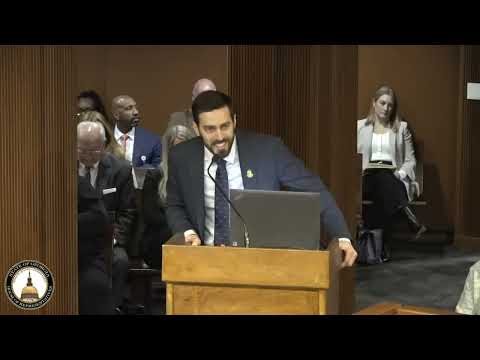
Representative Hogan introduced House Bill 657 (LC520794), telling the committee the text is unchanged from last year and noting it passed this committee unanimously in the prior session. The bill would add statutory definitions for "certified peer specialists," require training by entities approved by the Department of Behavioral Health and Developmental Disabilities (DBHDD), and set minimum standards to promote consistency and protect people seeking recovery support.
Supporters said the bill is narrow and aims to preserve each RCO’s community-specific approach while ensuring clients receive accountable, trained care. Brian Kite, RCO development program manager for the Georgia Council for Recovery, said RCOs operate in emergency departments, run co-responder teams with law enforcement in some counties and that Georgia now has dozens of state-funded or developing RCOs. Jeff Breedlove of the Georgia Council for Recovery and Madison Baker of Living Proof Recovery described RCOs’ roles helping people after treatment and urged the committee to move the legislation.
Witnesses and advocates emphasized that the care provided at RCOs is nonclinical peer support and that statutory standards would protect vulnerable people and preserve trust with local funders and partners. Committee members asked clarifying questions about whether the bill changes prior language (it does not) and confirmed prior unanimous committee support. The committee adopted a "do pass" recommendation by voice vote.
The measure contains a DBHDD training requirement and a registration/oversight mechanism so clinics and RCOs would be identifiable to the state; supporters said that registry is important for quality and safety. No statutory citations were invoked during the hearing beyond references to DBHDD oversight.
The committee moved the substitute forward by voice vote. Next steps: the bill advances from committee to the next stage in the House process.