Get Full Government Meeting Transcripts, Videos, & Alerts Forever!
Get email alerts on the Nuisance Law topic
No spam. Unsubscribe anytime.
Georgia committee advances bill to shield longstanding racetracks from some nuisance suits
Summary
HB 1066 would amend Georgia nuisance law to recognize a five‑mile protection zone for established motorsports facilities, limiting private and public nuisance claims tied solely to surrounding development while preserving claims for material operational changes; the subcommittee voted the bill out after testimony from industry and local track operators.
The State and Local Government Subcommittee advanced House Bill 1066, a proposal to amend Chapter 1 of Title 41 to create limited immunity from nuisance claims for established motorsports facilities when surrounding development encroaches on long‑standing operations.
Representative Wade, sponsor of HB 1066, told the panel the bill would define a motorsports facility protection area as a five‑mile radius and protect operations that have been lawfully established and consistently operated. The immunity would be prospective, cover both public and private nuisance claims tied only to nearby development, and would not bar lawsuits if a facility materially changes its operations (for example by expanding hours or frequency of events).
Tierra Hubbard, testifying for the performance racing industry, said Georgia’s motorsports sector contributes roughly $1.58 billion in annual economic output and supports nearly 10,000 jobs in the state. Jeremy Porter, owner of Atlanta Motorsports Park, described the track’s community programs, teen driving school and job creation and emphasized local economic activity and monitoring practices used to limit noise impacts.
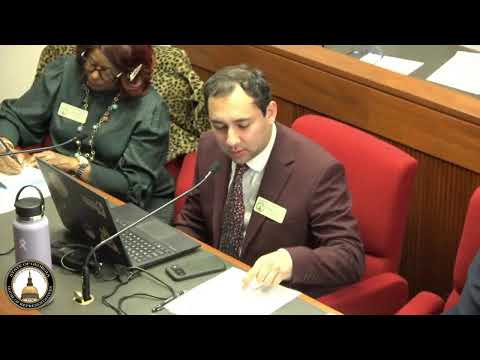
Committee members pressed the sponsor about the five‑mile radius, local ordinances governing operating hours and how the bill would treat changed circumstances such as a facility being repurposed. Representative Bernal raised concerns about health‑related situations (for example residents with dementia) and asked whether affected individuals would still have recourse; the sponsor said the bill preserves claims when a facility materially alters operations and that owners and operators are encouraged to work with neighbors in one‑off situations.
After questions and public testimony, the committee made a motion, seconded, and reported the measure out of the subcommittee by voice vote; the chair recorded one opposed voice on the record. The bill’s sponsor and industry witnesses said they would be available to work with members on technical language before full committee consideration.
The bill's text would explicitly reference definitions in Chapter 1 of Title 41 and apply prospectively. Committee members requested additional drafting clarifications on the scope of protected operations and how local ordinance compliance would be documented.