Get Full Government Meeting Transcripts, Videos, & Alerts Forever!
Get email alerts on the Foundation Fundraising topic
No spam. Unsubscribe anytime.
Mercer Island Schools Foundation reports record fall haul, outlines five-year fundraising plan
Summary
The Mercer Island Schools Foundation said its fall campaign raised $745,098 (Sept.1—Dec.31), with year-to-date totals of $786,055, and announced a foundation-led five-year strategic plan to define and address an estimated district funding gap.
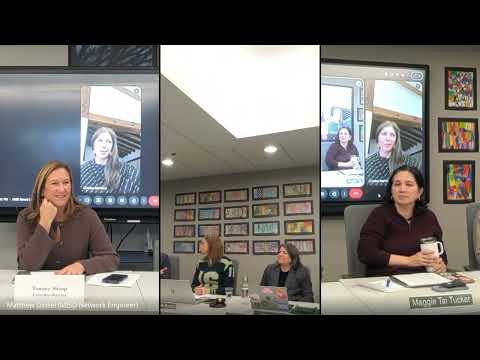
Tammy Shoop, executive director of the Mercer Island Schools Foundation, told the board on Monday that the foundation's All-In for Kids fall campaign (Sept.1—Dec.31) raised $745,098 and that year-to-date fundraising stands at $786,055 — the strongest fall haul in recent memory.
The foundation reported a shift in donor behavior: fewer small gifts but more large donations. "We're getting very big gifts," Shoop said, and the foundation's raise-the-paddle at the Denim & Diamonds event contributed roughly $106,000 to that total; sponsorship revenue this year was about $30,000. The foundation also funded 60 teacher grants totaling nearly $90,000.
Why it matters: Foundation and PTA dollars are among the least-restricted funding sources available to the district, allowing immediate classroom impacts such as curriculum pilots, paraeducator positions and enrichment programs that federal and state funds do not always allow. Board members and foundation leaders said boosting family participation across elementary schools is a priority because high-dollar gifts alone do not create sustainable, predictable revenue.
Foundation strategy: Owen Smith, a new foundation board member leading a strategic planning committee, said early modeling suggests a multi-million-dollar district funding gap that must be better defined. "We're thinking a five-year plan so we know whether the gap is $1.5 million, $3 million or $5 million," Smith said. The committee has begun meetings with district staff to scope needs and potential roles for the foundation.
Impact example: Shoop read an impact statement from paraeducator Nick Reese describing a neural-pathways instructional workshop funded by the foundation. According to the statement, the training "had an immediate impact on my small-group practice" and provided "concrete scientific evidence of the neural pathways involved," a result the foundation said it hopes to showcase in newsletters to encourage giving.
Next steps: The foundation plans targeted spring efforts to raise participation (not just dollars) at elementary schools, experiments with participation contests and classroom incentives, and ongoing outreach events. Smith and Shoop said the foundation will continue to refine donor lists, rely on a new database manager to improve contact accuracy and align grantmaking to district priorities.
The foundation also opened the Penny Anta $3,000 senior scholarship and previewed plans for the upcoming Breakfast of Champions and spring pancake breakfasts that the group hopes will engage more families.
Ending: Foundation leaders asked board members to help by serving as table captains and promoting low-barrier giving options (monthly giving, small-dollar asks) to broaden the donor base.