
Caltrans highlights sustainable pavement techniques and SB 1 efficiency gains
Get AI-powered insights, summaries, and transcripts
Subscribe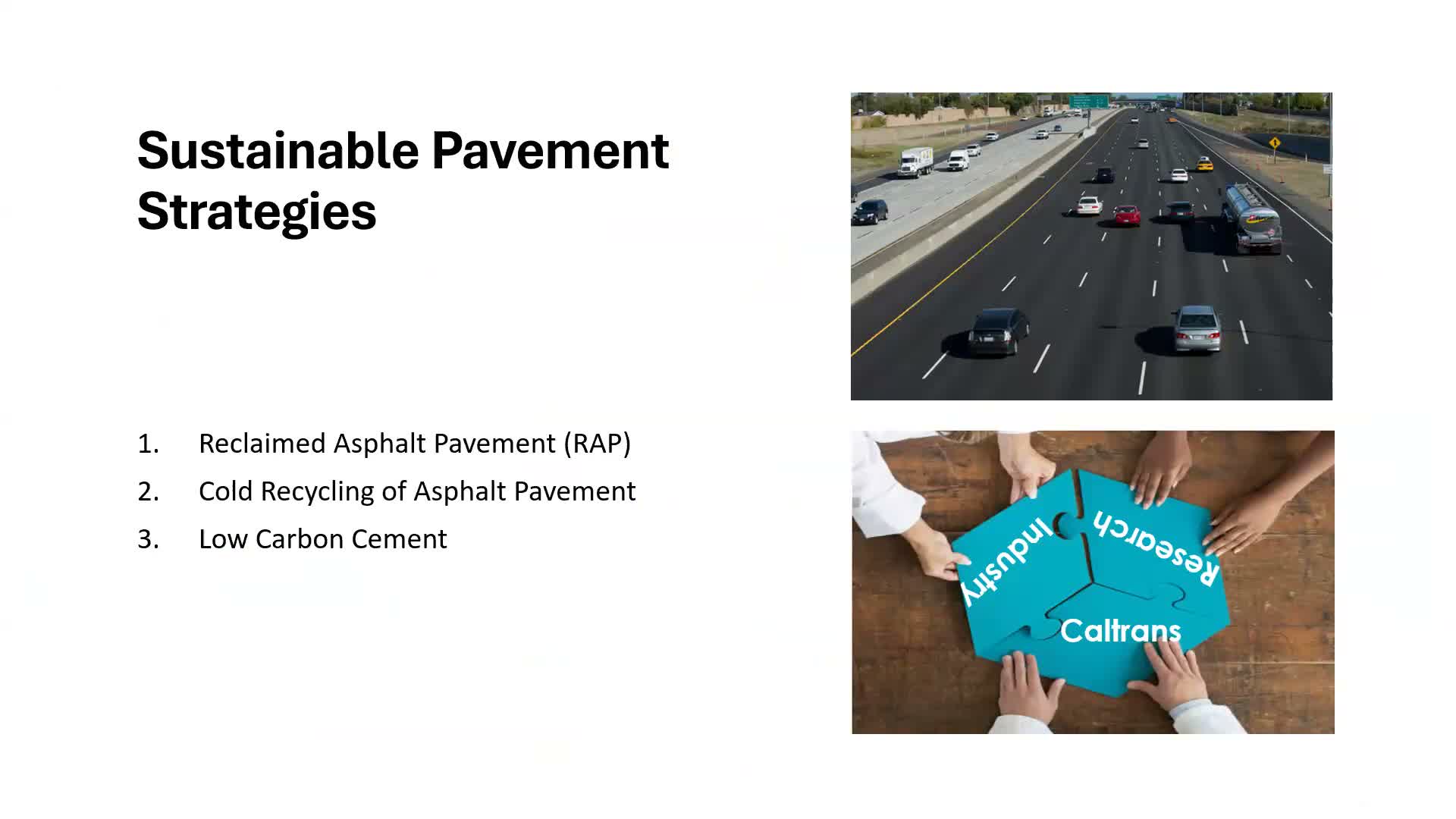
Summary
Caltrans presented sustainable pavement strategies (RAP/wrap, cold recycling, low‑carbon cement) that reduce greenhouse gas emissions and can lower life‑cycle costs, and reported FY23‑24 SB 1 efficiencies totaling $176M (and $350M including legacy practices) on Caltrans' new Building CA website.
Caltrans used the Jan. 29 commission meeting to showcase sustainable pavement strategies and report SB 1 efficiencies for fiscal year 2023‑24.
Tigi Thomas, Caltrans state pavement engineer, described 22 sustainable pavement strategies (15 implemented) including reclaimed asphalt pavement (RAP or “wrap”), cold in‑place recycling, and low‑carbon Portland limestone cement (PLC). She noted typical benefits: RAP substitution can cut greenhouse gas emissions by 20–30% and reduce material cost in some projects by 10–15%; cold recycling can add 10–15 years of life and reduce emissions by up to 40% depending on conditions. Caltrans also mandates use of recycled rubber in asphalt mixtures and reported meeting or exceeding annual rubber use targets.
Caltrans also presented the SB 1 efficiencies report and Building CA web portal. Staff reported Caltrans exceeded the SB 1 goal in FY23‑24 with $176 million of efficiencies counted toward the statutory $100 million annual target and an additional $174 million in legacy savings (a $350 million total). Examples included alternative delivery methods (CM/GC), longer‑life pavements, drone use, and expanded zero‑emission fleet deployment. Caltrans rolled out an online efficiencies report and project map to improve transparency and make data and media accessible to the public.