Get Full Government Meeting Transcripts, Videos, & Alerts Forever!
Get email alerts on the Economic Competition topic
No spam. Unsubscribe anytime.
Officials debate semiconductor competition and the Development Finance Corporation’s role in countering China
Summary
In questioning the assistant secretary, a senator contrasted the U.S. CHIPS Act with Chinese industrial policy, cited a claimed $50 billion Chinese semiconductor investment, and pressed the administration on using the Development Finance Corporation and other tools to offer partners alternatives to Chinese projects.
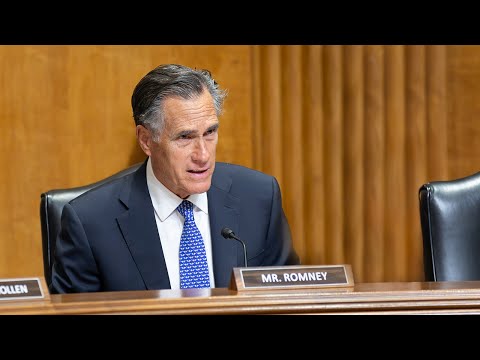
A senator used a hearing to press an assistant secretary on economic levers the U.S. can use to counter China’s influence, focusing on semiconductor competition and the role of the Development Finance Corporation (DFC).
The senator contrasted the CHIPS Act and U.S. semiconductor efforts with what he described as China’s longstanding industrial strategy. He told the committee China has had ‘‘a chips act in place for almost a decade, spending over $50,000,000,000 to establish a competitive, semiconductor capacity,’’ and asked whether Beijing’s investments threaten to isolate Taiwan economically or to shift key supply chains.
The assistant secretary described the economic picture as mixed: commercial ties across the Strait remain robust even as Beijing has at times applied coercive economic measures—curtailing trade or threatening agreements in sectors Beijing deems politically impactful. The assistant secretary urged that partners should understand the long‑term implications of projects that may carry debt, labor or environmental concerns.
The assistant secretary highlighted congressional authorities and financing tools—naming the Development Finance Corporation—as ‘‘transformational’’ for offering infrastructure and economic assistance that provide partners an alternative to coercive projects. The senator urged the DFC to prioritize projects that advance U.S. national security and economic interests rather than purely humanitarian efforts.
No formal decisions or new funding allocations were made during the hearing; the exchange emphasized congressional oversight and the executive branch’s ongoing work to deploy economic tools alongside security cooperation.