Lifetime Citizen Portal Access — AI Briefings, Alerts & Unlimited Follows
Debate over Northern Corridor bypass centers on tortoise habitat and local development risks
Loading...
Summary
At a Saint George Area Chamber of Commerce event, presenters described the proposed 46‑mile Northern Highway and debated whether mitigation and route choices can protect habitat for the federally protected Mojave Desert tortoise while relieving traffic congestion and avoiding local business displacement.
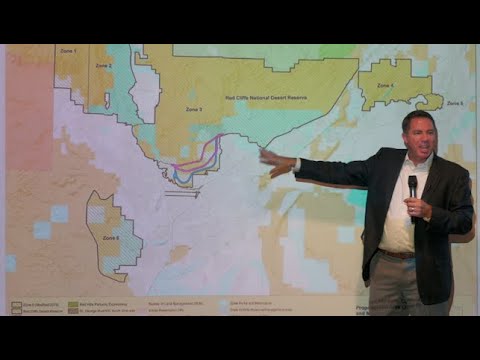
Presenters at a Saint George Area Chamber of Commerce "eggs and issues" event outlined competing views on the proposed 46‑mile Northern Corridor bypass, saying it is intended to divert traffic away from the I‑15 / Saint George Boulevard exit but would pass through the Red Cliffs Desert Reserve and could affect habitat and local businesses.
Unidentified Speaker 2 argued the bypass is needed to ease what they called "a real bottleneck for our transportation planning in our community," saying a bypass would let through‑traffic avoid routing through Saint George to reach Hurricane, Santa Clara and Ivins. The same speaker described mitigation measures the county funds, saying, "We set aside a ton of land ... the county employs a couple biologists. We fund studies. We fund plant restoration." These measures, the presentation said, are meant to offset impacts on the Mojave Desert tortoise.
Unidentified Speaker 1 summarized the concerns of opponents, saying routings through the reserve "will harm the habitat for the federally protected Mojave Desert Tortoise" and could spur speeding traffic and development. The presentation also reported that environmental groups have filed a lawsuit to stop construction and that the Biden administration's stated public‑lands review has, so far, paused further development.
The presentation (citing Washington County attorney Eric Clark) outlined three possible designated routes north of Red Hills Parkway from Exit 13. Organizers said the cheapest, most direct option was identified as the "yellow" route, while the county pursued a "purple" route intended to track the reserve boundary after consultation with federal biologists. Presenters said two alternatives would create expressway‑style ramps at Red Hills Parkway; those designs, they said, would convert parts of 1000 East (near a Tropical Smoothie Cafe and a Motel 6) into interchanges and would limit local access to Pioneer Park and the Water District's gardens to right‑turn exits onto 55–65 mph traffic.
Presenters warned of a legal and administrative threshold that could change protections: the presentation said Zone 6 protections are triggered by the state holding a valid right‑of‑way, and if that right‑of‑way were to be invalidated the presentation contended the zone protections could lapse and school trust lands could become developable. The presentation also quoted a view that prospects for the project may depend on federal decisions and the political party of the White House, noting routine administrative reviews when administrations change.
No formal vote or local government action was recorded at the event. Presenters described technical tradeoffs — traffic relief vs. habitat and community access — and said litigation and federal review currently constrain the project's near‑term progress. The event did not provide a schedule for future local decisions or list a named court case for the environmental lawsuit.