Get Full Government Meeting Transcripts, Videos, & Alerts Forever!
Get email alerts on the Trail Opening topic
No spam. Unsubscribe anytime.
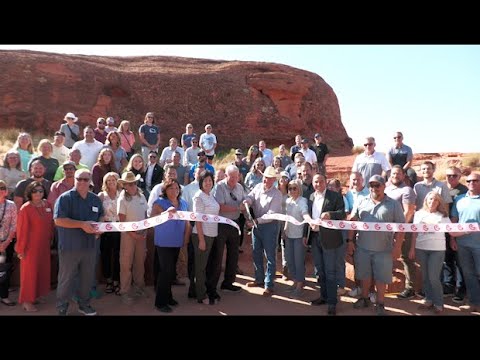
New Pioneer Park trail and pavilion open in Saint George with accessibility features and historic markers
Summary
Community leaders cut the ribbon on an interpretive trail and pavilion at Pioneer Park in Saint George, highlighting historic designations, accessibility for people who are blind and funding from local tax and a tourism grant.
SAINT GEORGE, Utah — Local leaders and community members celebrated the opening of a new interpretive trail and pavilion at Pioneer Park on Tuesday, an effort organizers said preserves local history while adding safety and accessibility features.
Organizers including Steve Snow and Lyman Hafen were credited during the ceremony for helping bring the project to fruition. Lyman Hafen, a sixth-generation Saint George resident, said the Sugarloaf (also called Dixie Rock) reflects an "I can do Dixie" spirit that he said has carried through generations.
The project creates a safer connection beneath Red Hills Parkway and improves patrol and emergency access, speakers said. One speaker described the trail’s new path as allowing officers and responders to reach incidents "that much easier" by bicycle or car.
Speakers said the trail was paid for in part by local sales-tax funds described in the remarks as "wrap tax" (also referred to elsewhere in the event as "route tax") and by a tourism grant. A project representative said the local tax helps close funding gaps for trail connections and for work not accounted for in original bids.
Organizers emphasized interpretive signs and on-site materials meant to explain the region’s pioneer history and natural features. At the ceremony an attendee read material from the signs, saying, "The Dixie spirit is the light radiating from a precious gem formed under the pressure of isolation and desperation in pioneer times and shines on today in all that is good, real, and true about Utah's Dixie."
Speakers also noted new accessibility features intended to help people who are blind experience the site: tactile prompts and hearing devices installed along the interpretive trail. "Doing something like this with the park will give . . . the blind community the ability to walk through and experience the same things that the sighted communities take for granted," one speaker said.
The ceremony included reminders of the site's deeper history: presenters noted the area was originally inhabited by the southern Utah Paiutes and that special fences have been placed along parts of the trail to limit desert tortoises crossing from the protected Red Hills Desert Reserve.
A speaker also thanked Kyle Wells for work on national historic nominations, saying the nearby Black Hill and the city-owned Sugarloaf now have national historic designations.
The event concluded with community members sharing memories of climbing the Sugarloaf as children and praising the signs that explain local plants, indigenous history and pioneer life. Melissa Anderson closed the segment as "community education news."