Get Full Government Meeting Transcripts, Videos, & Alerts Forever!
Get email alerts on the Supportive Housing topic
No spam. Unsubscribe anytime.
Clearfield adopts supportive-housing overlay with limits on height and density
Summary
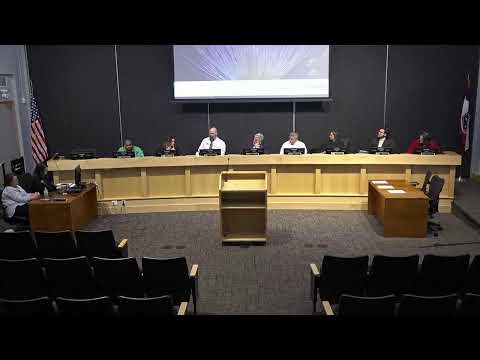
Clearfield City Council unanimously adopted a Supportive Housing (SH) overlay zone to allow county-supported supportive housing on C1 parcels, setting a 60-unit cap, 16-units-per-acre density limit, a 35-foot/two-story maximum, and requiring a development agreement and 24/7 on-site management.
Clearfield City Council on a unanimous vote adopted a new Supportive Housing (SH) overlay ordinance intended to allow permanent supportive and transitional housing on certain C1 parcels while imposing development standards intended to protect adjacent neighborhoods.
Tyson, a city staff presenter, told the council the ordinance is a local zoning tool to enable Davis County and other partners to locate supportive housing in Clearfield if they choose. He said the county has been acting under state planning guidance ("Utah's Plan to Address Homelessness") and that the county currently faces a state-driven requirement to provide roughly 60 beds of permanent supportive housing countywide. Tyson described the SH overlay as an overlay that would be applied to C1 parcels, require a rezone and development agreement, and follow specific development standards.
Key standards adopted in the ordinance include a maximum facility size of 60 units; density limited to 16 units per acre (reduced from a prior draft that allowed 20 units per acre); a maximum height of 35 feet and an explicit limit of no more than two stories above grade; a requirement for 24/7 on-site management; landscaped open space of 25% of the site; a district transition buffer and additional screening where an SH facility would abut single-family zones; and a requirement that at least one amenity be provided for residents. Tyson said many of those elements reflect council feedback to keep infill projects consistent with nearby R-3 densities and to reduce impacts on long-standing single-family neighborhoods.
At public comment, Michael Christiansen, a Clearfield resident, said he supports supportive housing generally but criticized the reduction of density from 20 to 16 units per acre and the two-story limit. "All you're doing is making this more difficult," he said, arguing that higher density and an extra story would make projects more efficient and better located near transit and services. Council members acknowledged that higher density can improve efficiency but said many C1 parcels in Clearfield are small and abut single-family homes; the council said the ordinance aims to balance housing needs with protections for established neighborhoods.
The ordinance passed unanimously; the vote authorizes the mayor to sign any necessary documents. The ordinance does not identify a specific site; Tyson said the county is still looking for a location and the city expects to review site-specific rezone and development-agreement proposals if and when the county selects a property. Next steps are site identification by the county, followed by any rezone or site-plan approvals required under the SH overlay.