Get Full Government Meeting Transcripts, Videos, & Alerts Forever!
Get email alerts on the Housing Policy topic
No spam. Unsubscribe anytime.
Arcata council introduces housing code changes, raises inclusionary trigger to 60 units
Summary
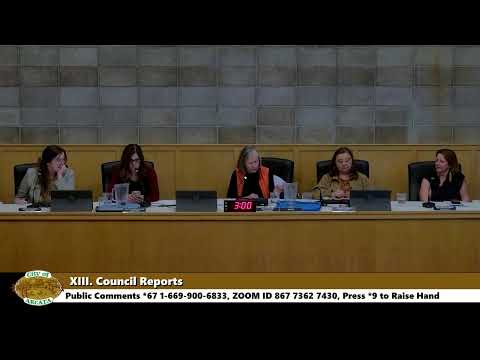
The Arcata City Council introduced Ordinance 15-75 on April 2, 2025, updating density-bonus language and adding a new inclusionary zoning chapter. Council amended the draft to raise the inclusionary trigger from 30 to 60 units and agreed to return the ordinance for adoption April 16.
Arcata — The City Council on April 2 introduced an ordinance that updates the city's land-use code to align the local density-bonus rules with state law and to add an inclusionary zoning provision requiring affordable units in larger market-rate projects. Council members amended the draft to change the proposed inclusionary trigger from 30 units to 60 units before introducing the ordinance.
Senior planner Joe Mateer told the council the changes would refresh Chapter 9.31 (density bonus) and add Chapter 9.32 (inclusionary zoning), both intended to increase housing affordable to lower-income residents. "Chapter 9.32 is new. It is allowed by state law but not mandated," Mateer said, describing the inclusionary requirement as a tool the city would apply to larger projects that meet a unit-count threshold.
Why it matters: the inclusionary provisions would require modest set-asides of affordable units when triggered, creating a steady local source of below-market units independent of state or federal grants. Council members noted that recent and potential reductions in grant funding mean relying only on outside subsidies could leave gaps in delivering housing for low- and moderate-income households.
Council debate centered on the ordinance's trigger and market effects. City staff said the draft called for a modest set-aside when a market-rate project exceeds the trigger, and that the density bonus remains voluntary; a developer electing the density bonus would receive concessions and incentives in exchange for providing affordable units. "The density bonus can be requested at any number," the city's community development director said, noting recent state changes that allow requests at less-than-maximum densities. Council members cited Arcata's RHNA performance — strong delivery of very-low, low and moderate units but a shortfall in above-moderate units — and pressed for a threshold that would not discourage smaller developers.
After public comment and deliberation, a council member moved to introduce Ordinance 15-75 with an amendment changing the inclusionary trigger from 30 to 60 units and to adopt the related CEQA finding; the motion was seconded and adopted by voice vote. The council set the item for adoption on April 16, 2025.
What remains: Council instructed staff to return with the ordinance text reflecting the amended trigger and to continue coordinating with the state housing department as part of the general-plan implementation schedule. The introduction does not enact the inclusionary rules; adoption and implementing details (percentages, income targeting, and administrative mechanisms) remain subject to further council action.
Sources: Senior planner Joe Mateer; community development staff; council deliberations and public comment during the April 2, 2025 Arcata City Council meeting.