Get Full Government Meeting Transcripts, Videos, & Alerts Forever!
Get email alerts on the Public Participation topic
No spam. Unsubscribe anytime.
Arcata council keeps Zoom and early public comment after lengthy debate; directs procedural fixes
Summary
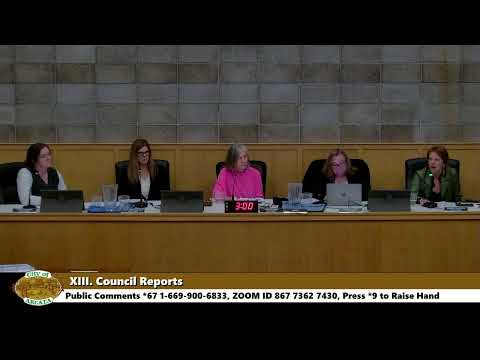
Following a long staff presentation and extensive public comment, Arcata’s council decided Nov. 5 to retain virtual (Zoom) public comment and the early oral‑communications agenda slot, while instructing staff to simplify speaker cards, manage the Zoom queue, and implement other housekeeping edits to the protocol manual.
City staff and the deputy city attorney proposed a set of updates to the City Officials Protocol Manual on Nov. 5 intended to reflect state law changes (notably Senate Bill 707) and streamline internal processes. The proposed edits would have removed the longstanding requirement to post agendas at the public library, tightened staff report submission deadlines, and — most contentiously — eliminated standing virtual public participation (Zoom) for cities under 30,000 unless specific criteria were met.
Deputy City Attorney Nubia Goldstein explained the legal background: SB 707 creates new outreach, translation, and remote‑participation requirements for larger jurisdictions, and leaves smaller jurisdictions more discretion; AB 2449 and pandemic‑era adjustments previously broadened remote rules but the new law raises different obligations. Staff raised operational concerns about Zoom, including instances of duplicate in‑person/online speaking and past Zoom‑bombing, and suggested options ranging from a temporary trial removal of remote participation to a more limited, rules‑based approach.
Public comment was extensive and largely opposed the removal of Zoom. Dozens of residents, disability advocates, students, and service‑provider representatives argued that Zoom expands civic access for people who are elderly, disabled, working evenings, caretakers, or otherwise unable to attend in person. Several speakers also tied the issue to broader concerns about the council’s handling of foreign‑policy‑related public comment (many callers had raised Gaza‑related issues in recent meetings); residents warned that removing Zoom would disenfranchise those who cannot attend in person.
Councilmembers debated how to balance accessibility with orderly proceedings. Suggestions included clearer signage and instructions for public participants, changing the handout card system (remove colored 1–4 scheme and use a single numbered queue), showing Zoom speaker timers, and locking the Zoom commenter list before taking comments to prevent duplicate inputs. Councilmember Sarah (speaker 5) proposed keeping Zoom and early oral communication but improving queue management; that approach gained support.
The council agreed on a package of procedural choices: retain the early two‑minute oral communications time (limited to in‑person speakers for that initial 15‑minute block with a simplified eight‑card in‑person queue), keep Zoom for later public comment, require staff to capture the Zoom queue before opening comments (announce number of online speakers and process them in order), and proceed with other housekeeping changes (remove library posting requirement, move staff report internal deadline to Monday) while omitting any outright ban on virtual participation. Council directed staff to draft the protocol manual changes reflecting those decisions and to return with revisions.