Get Full Government Meeting Transcripts, Videos, & Alerts Forever!
Get email alerts on the Animal Protection Services topic
No spam. Unsubscribe anytime.
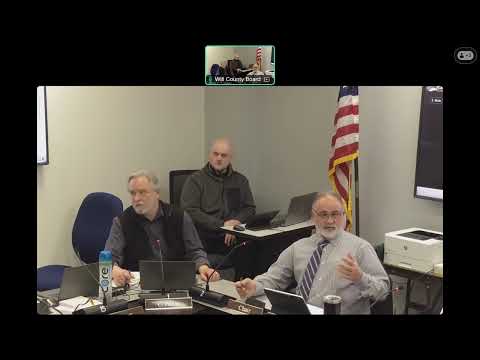
Will County committee presses for data, IGAs as animal protection services faces rising intake
Summary
Will County committee urged Animal Protection Services to deliver a data-driven report after members raised concerns about municipalities storing animals at police stations, limited IGAs, and whether a single centralized shelter or multiple municipal sites would best serve the county.
Will County’s Capital Committee spent the bulk of its meeting pressing Animal Protection Services for a clear plan to handle a growing number of animals and to clarify how municipalities could formally contract for services.
Chair Butler and multiple members said they hear from towns that lack access to county intake and that officers and municipal staffs are currently storing animals—sometimes in police station rooms. A committee member asked specifically for intergovernmental agreements (IGAs) for Crete, Steger and Monee so those municipalities could pay into a service rather than manage animals informally.
Anna Peyton, introduced to the committee as director of Animal Protection Services, said the county’s facility footprint is small and that the department is working on a space and needs assessment to guide investment decisions. Peyton said a bid to local veterinary hospitals after COVID drew no responses and emphasized the operational complexity of any change: “This building was not built to house animals…there’s only 5 dog kennels that was built in this building,” she said, and noted intake numbers are rising. “Incoming animals back in 2022 was 575 animals and the past 3 years were 900,” Peyton said, calling the trend a “critical issue.”
Butler argued against building one large $10 million centralized shelter and suggested a multi-site approach with municipal sites supervised by county-appointed facility managers. Peyton cautioned that multiple remote locations increase staffing and operational costs and urged decisions be based on the department’s forthcoming data and heat maps of where stray and intake calls occur.
Julie (committee member) and other members cited an existing facilities needs assessment and asked the department to assemble a current report with operational details, staffing projections, options and cost estimates so the committee and the full county board can make an informed recommendation. The committee agreed to request that the Animal Protection Services director appear at a future meeting with that analysis.
No formal action or ordinance was adopted at the meeting; members directed staff to gather information and return with a report.
The committee also asked staff to provide the current list of existing IGAs and a sample IGA for review and to share any interim provider lists that municipalities could use while the county finalizes longer-term arrangements. The committee scheduled follow-up work and said it would revisit the topic once Animal Protection Services presents its needs assessment and operational recommendations.