
Ione council directs staff to negotiate AWA easement after contentious public debate
Get AI-powered insights, summaries, and transcripts
Subscribe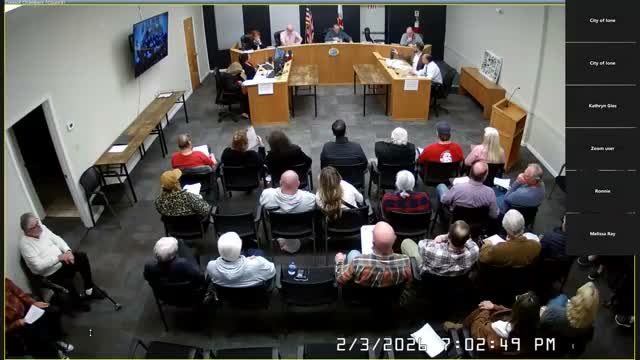
Summary
After a multi-hour public hearing, the Ione City Council authorized staff to negotiate an easement with the Amador Water Agency to divert AWA backwash off city ponds, but members declined a separate motion to immediately execute the easement. Residents were split over potential rate impacts and tangible benefits to the city.
The Ione City Council on Feb. 3 directed city staff and the city attorney to negotiate an easement with the Amador Water Agency (AWA) that would re-route AWA’s backwash and sludge off Ione’s wastewater ponds and onto a private processor. The council’s direction requires staff to return with a negotiated agreement for council review rather than authorizing immediate execution.
The easement proposal, presented by AWA operations representatives, would run a buried pipeline from AWA’s treatment facilities through Howard Park and under highways to reach a private site where US Mine would accept the backwash and sludge. An AWA representative said the project is 100% designed and that environmental documents are complete; the agency has spent roughly $800,000 to date on design and environmental work. The AWA presenter described the backwash as a concentrated wastewater containing aluminum and said diverting that stream would reduce pressure on Ione’s ponds and treatment plant during wet weather.
“Once we get this, it would allow us to continue to move forward with all the other ones that are private,” the presenter said, adding that the arrangement would reduce AWA’s overhead and costs and relieve Ione’s treatment system of material it must process.
Council members pressed AWA and staff on several points: whether and how the city had consented to earlier environmental work on city land, the terms of any contract with US Mine, the amount of water and sludge involved (commenters cited figures ranging from about 7,500 gallons per day to hundreds of thousands), and what direct, enforceable benefits Ione would receive in return. One council member asked for a water-balance that excludes regional partners to understand Ione’s independent obligations.
Public comment ran more than an hour and showed a deeply divided community. Supporters said the easement would free capacity, enable new housing and commercial connections and avoid a more expensive alternative to dispose of backwash. Opponents urged the council to negotiate concrete compensation — for example, capital improvements at Howard Park, reduced park water costs, or guaranteed first rights to any diverted water — and warned the city could see little financial upside while AWA and US Mine capture most long-term value.
A related, more final motion — to authorize staff and counsel to prepare and execute the easement immediately — was put to the council but did not carry following recorded aye/no responses in the meeting. The chair instead prevailed on a motion to have staff finish negotiations and return with a proposed easement for formal adoption.
What happens next: staff and the city attorney will negotiate specific terms (compensation, rights of first refusal for the city if water becomes scarce, permitting responsibilities and any mitigation for parks or residents) and bring the draft agreement back to the council for consideration.
Votes at a glance: - Direction to staff and legal counsel to prepare and negotiate an easement agreement and return it to council: motion approved (council directed staff to negotiate and return with a proposed agreement for council review). - Motion to prepare and execute an easement immediately (more final authorization): put to the council during the meeting; transcript records aye/no responses and the chair moved to conclude the vote; council did not adopt immediate execution.
Why this matters: Ione’s wastewater ponds have experienced high winter inflow and infiltration and occasional pond flooding, and regional partners (Sutter Creek, CDCR) are changing long-term disposal plans. Diverting AWA backwash could reduce near-term treatment loads and buy time for a long-term capital solution, but residents and some council members said the city must secure clear, enforceable benefits before ceding disposal rights along park land.