Opelika council holds public hearing, opens two‑week review on temporary moratorium for new residential entitlements
Loading...
Summary
The council held a public hearing and gave first-reading consideration to a temporary moratorium that would pause new entitlements such as rezonings and PUD approvals pending zoning, sewer and transportation reviews. Speakers for and against urged caution, raised infrastructure and economic concerns, and staff said the administration will use the two-week period to provide further information.
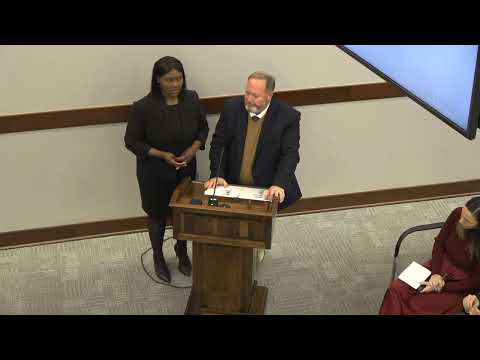
The Opelika City Council opened a public hearing on a proposed temporary moratorium on new residential and multiple-occupancy entitlements and held the ordinance for a first reading, giving the public and council two weeks for further review and comments.
Planning staff explained the moratorium is an entitlement moratorium rather than a construction freeze: "It simply looks at items like rezonings, like master development plans through a planned unit development...it pauses entitlement and approval of potential new projects so that we're not continually adding to the number of units," planning staff said (planning staff identified in the transcript as "Matt"). Staff said the moratorium would target new plats of five or more lots, new conditional uses for multifamily, rezonings that increase residential density and similar entitlement requests, while allowing lots of record and previously approved projects to continue under existing approvals.
During the public hearing, several residents urged the council to adopt at least a one-year moratorium to allow officials to update ordinances and audit infrastructure. Rachel White told the council she favored "at least a one year moratorium," citing pipeline counts she said included roughly 6,500 single-family and 2,500 multifamily units that could stress schools, roads and emergency services if processed without pause. Jeff Reichel supplied a written six-point list urging green-space rules, incentives for smaller homes, stronger enforcement against developer malfeasance and applying new rules to large approved-but-not-started projects.
Some speakers urged caution about economic consequences. Rayce Cannon asked the council to add language exempting residential components of projects that share privately installed infrastructure (citing a Publix-linked project) so necessary commercial development would not be chilled. Council and staff discussed use of consultants; staff said the council had already approved budgeted consulting funds to review the zoning ordinance, sewer capacity and transportation planning.
The moratorium was introduced for first reading and will return after two weeks of discussion; no final ordinance adoption occurred at this meeting. Staff and councilmembers indicated materials and further clarification will be provided during the review period.