
OETA says transmitter overhaul cuts costs; no new state funding requested for FY27
Get AI-powered insights, summaries, and transcripts
Subscribe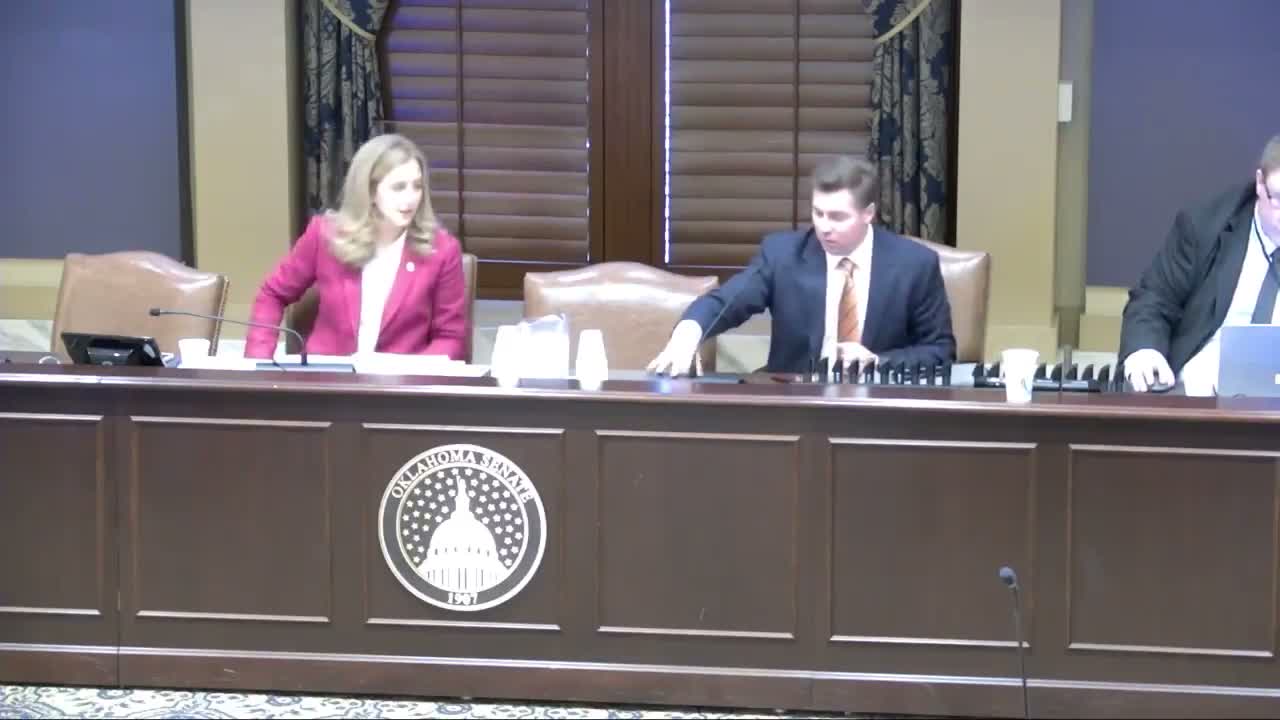
Summary
Oklahoma Educational Television Authority Director Sean Black told the Senate Education Subcommittee that OETA replaced its statewide transmitters with fiber connections and will not seek a FY27 budget increase despite the loss of CPB funding, citing electricity and maintenance savings.
Sean Black, executive director of the Oklahoma Educational Television Authority, told the Senate Education Committee’s Subcommittee on Appropriations that OETA will not request an increase in its FY27 budget and highlighted recent infrastructure upgrades.
Black said the agency completed a multi-year replacement of transmitters and last-week fiber connections in Velma, bringing the entire system onto fiber. "We will make 70 years of continuous broadcasting in April," he said, noting the transmitter upgrades are driving operating savings. Black reported electricity expenditures are about $13,000 lower so far this year and said outsourcing maintenance is expected to save roughly $22,000 by year-end.
The presentation framed the upgrades as both a service and cost-efficiency measure. Black said OETA is the only statewide broadcaster that covers all 77 (counties were implied in the presentation), distinguishing its reach from commercial stations that serve limited markets. He emphasized OETA’s education services — 4 million streams in one month on the PBS Kids app, about 214,000 monthly PBS Kids users, a PBS LearningMedia library with roughly 100,000 titles and about 10,000 hours of children’s programming on OETA’s main HD channel.
Black told lawmakers the agency budget for FY27 does not include an increase to replace lost CPB (Corporation for Public Broadcasting) funding, which he said will run out in September of the year following the two-year CPB allocation cycle. To offset that loss, he said OETA plans to increase fundraising, hold more events, seek foundation grants and expand partnerships.
Committee members asked whether the transmitter replacements reduced electricity usage and costs. Black said the new equipment is significantly more efficient, describing examples such as reduced air-conditioning needs at remote transmitter sites and instances where equipment now needs heating rather than cooling. "The efficiency that we're gaining from this new equipment is just...unbelievable," he said.
The subcommittee did not take formal action on the agency’s budget during the hearing. The presentation concluded with the committee thanking OETA and moving to the next agenda item.