Seattle Office of Labor Standards highlights enforcement wins, warns of funding strain
Loading...
Summary
The Office of Labor Standards told a Seattle City Council committee it has recovered more than $62 million for workers but faces shrinking general-fund support and rising enforcement demands; staff outlined plans to use a new network-company licensing fee for app-based worker implementation and to deepen regional enforcement partnerships.
The Seattle Office of Labor Standards told the City Council's Human Services, Labor and Economic Development Committee on Feb. 6 that the office has recouped more than $62 million for workers since becoming a department but is navigating budget cuts and new enforcement responsibilities.
"Over the lifespan of our department since we became a department in 2017, we've been able to recoup over $62,000,000 for workers," said Steve Marchese, director of the Office of Labor Standards, during a presentation to the committee. Marchese said the office now enforces 16 local labor laws, up from five in 2017, and currently operates with about 35 full-time staff.
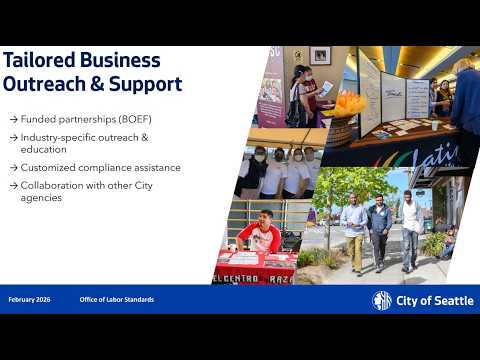
The department outlined three broad program areas: community partnerships and outreach, tailored business assistance, and strategic enforcement. Karen Levidis, policy manager, summarized the portfolio of laws OLS enforces, including minimum wage, paid sick and safe time, fair-chance employment, secure scheduling for food-service workers, domestic-worker protections and a set of app-based worker ordinances.
Marchese and deputy director Janay Jan said OLS assessed roughly $21.5 million in remedies in the past year and that more than 95% of assessed funds go directly to workers. "Last year we assessed over $21,500,000 in remedies for workers," Marchese said, adding that the work affected tens of thousands of workers.
Council members pressed staff for budget details. Marchese said the office's base general-fund support was about $8,450,000 in the current budget and that general-fund appropriations were reduced by roughly 8% in the FY25 and FY26 biennium. He described a network company license fee (a 10-cent-per-transaction licensing fee on app companies) that was enacted to support app-based worker implementation; the office is awaiting a Facilities and Administrative Services report on actual collections but used an earlier $1.6 million estimate in planning.
Several members raised concerns about the national enforcement environment. Council member Foster asked how OLS planned to respond to reductions in federal enforcement of labor laws. OLS staff said local enforcement can fill some gaps but that cross-jurisdictional issues require regional coordination. "If we are seeing say a violation in a particular industry or with a particular company that is nationwide or is across state lines, how do we have sort of partnerships and coordinated enforcement strategies?" Karen Levidis said.
The committee also focused on reports of labor trafficking and coercion. Council member Saka described anecdotes in which employers allegedly withheld pay or passports and threatened to call federal immigration authorities to keep workers from reporting abuses. OLS acknowledged the problem, described past strategic enforcement work in the residential construction sector that reached multi-million-dollar findings, and said the office partners with prosecutors and community organizations on trafficking and retaliation cases. "We do, in some instances, partner with law enforcement, particularly in the trafficking space," Levidis said, and Marchese said OLS will follow up with the committee and prosecuting offices on potential criminal liability and coordination.
OLS staff asked council members for continued engagement and pledged follow-up on requested budget numbers and enforcement partnerships.
What happens next: OLS will return with budget specifics and follow up with councilmembers about potential coordinated actions with the city attorney and King County prosecutor's office; the committee did not take any final votes on ordinances during the Feb. 6 meeting.