Get Full Government Meeting Transcripts, Videos, & Alerts Forever!
Get email alerts on the Tenant Based Rental Assistance topic
No spam. Unsubscribe anytime.
Scottsdale outlines tenant-based rental assistance pilot for seniors; HUD guidance clouds long-term transition
Summary
City staff said the TBRA pilot launched in November 2024, serves seniors at or below 30% AMI, currently enrolls 13 clients (cap 15), and could cost about $222,000 annually at full enrollment; staff said HUD guidance may prevent seamless transition to housing choice vouchers after two years.
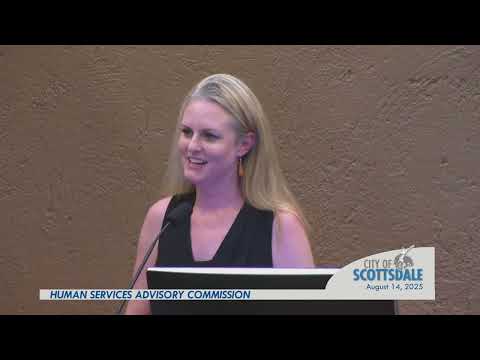
Chad Booker presented the city’s tenant-based rental assistance (TBRA) pilot to the Human Services Advisory Commission, saying the program launched in November 2024 to serve seniors at or below 30% of area median income who pay more than 50% of their income for rent.
"Approximately about 3 and a half years ago, we, started thinking about this and, officially launched in November 2024," Booker said. He described the program’s eligibility threshold (30% of AMI for a one-person household cited at $23,600 annually) and said the program is capped at 15 participants at a time. Booker reported that as of the most recent accounting the program had 13 seniors receiving assistance, with one lease newly signed and two additional clients approved but still looking for units.
Booker provided sample averages: an average monthly tenant income of $1,177, an average tenant rent share of $257, and an average monthly subsidy of about $1,200 for a total rent near $1,600. He estimated that running the program at full capacity (15 clients) would cost roughly $18,500 per month or about $222,000 a year.
Booker emphasized that case management is essential. "Without the senior savers caseworkers, there's no TBRA program," he said, noting caseworkers provide frequent contact, monthlies visits and more than quarterly touch points. Jennifer Murphy described case management activities in more detail — individualized service plans, landlord communications, eviction prevention, benefits navigation — and shared anonymized success stories of participants who gained housing stability through the program.
Commissioners pressed on sustainability and transitions. The chair asked whether clients would be "cut loose with no funding" at the end of the two-year period; Booker said the office received an April PHA notice and HUD guidance regarding emergency housing vouchers that could prevent rolling TBRA participants directly into housing choice vouchers and staff are seeking additional HUD guidance while preparing residents for alternative pathways.
Booker also described housing unit sourcing: a courtesy property listing hosted by the housing choice voucher office, landlord engagement initiatives and landlord advisory board events intended to recruit units and landlords willing to accept program assistance.
The commission requested updates as HUD issues further guidance and noted the program's reliance on case management and uncertain longer-term funding.