Get Full Government Meeting Transcripts, Videos, & Alerts Forever!
Get email alerts on the Black History Month topic
No spam. Unsubscribe anytime.
Montgomery County officials mark Black History Month, highlight local commemoration work
Summary
County speakers honored local Black leaders, recounted efforts by the Commission on Remembrance and Reconciliation to document lynching sites and install three historical markers, and emphasized representation in the judiciary and public memory.
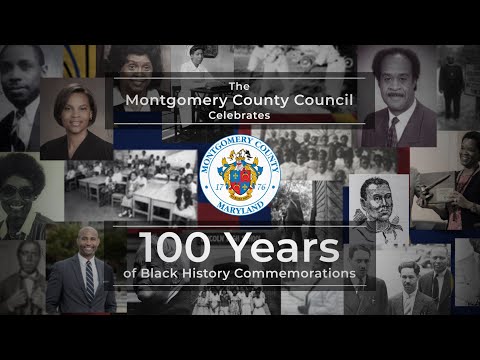
At a Montgomery County observance for Black History Month, county speakers honored local Black leaders and outlined steps the county has taken to document and commemorate racial violence and advance representation in county institutions.
Isaiah “Ike” Leggett, introduced by an opening speaker as a local trailblazer, spoke about his upbringing and public-service priorities. Leggett said, “My early life was such a struggle,” and described how that background shaped his focus on accountability and fiscal management. He noted sponsoring a measure to create an inspector general’s office in the county and described Montgomery County as an early adopter of bans on smoking in bars and restaurants as among his policy accomplishments. The remarks identified Leggett as the first African American elected to the Montgomery County Council and said he was later elected county executive in 2006.
Judge Carla Smith, introduced as the first African American woman on the Montgomery County District Court and the newly named administrative judge for the Circuit Court of Montgomery County, said she pursued a judgeship after seeing that a wall of prior judges’ photos did not "represent our county." "It’s so important for people to see people who look like them," she said, describing how representation on the bench shaped public confidence in the justice system.
Speakers also described the Commission on Remembrance and Reconciliation, established by county proclamation in 2019. The commission, the remarks said, was created by a proclamation from council members Rheema, Rice and Jawando and was inspired by the work of Bryan Stevenson. An unnamed county speaker said the commission has "engaged in acts of commemoration," including collecting soil samples at sites connected to three men—John Diggs Dorsey, Sydney Randolph and George Peck—who were dragged from this building and lynched nearby. The speaker said the commission has erected three markers: two in Rockville and one in Poolesville.
County speakers framed the commission’s work as part of a longer process of truth and reconciliation. They cited the markers and public acts of remembrance as steps toward community education about the Reconstruction-era racial terror that occurred in and around Montgomery County and to ensure those events are not forgotten.
Speakers closed by stressing the broader theme of the month. "Black history is American history," one speaker said, urging residents to remember and learn from the county’s history.
No formal votes or policy actions were recorded in the remarks; the event focused on commemoration and reflection.