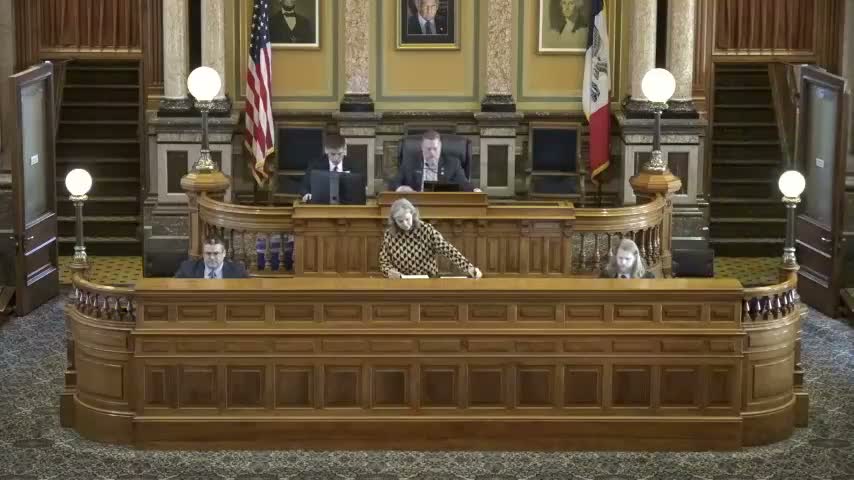
House gives first reading to dozens of bills, referring measures on energy, education and public safety to committees
Loading...
Summary
The House read dozens of first-reading bills and referred them to committees, including measures on grid upgrades, wind-turbine inspections, junior firefighter programs, education standards and liability for vaccine injuries; no floor votes on the substantive bills were taken.
The House of Representatives opened a session that included the first reading of multiple bills and routine referrals to committee.
A clerk-style reader announced House File 2283, a measure described as relating to grid-enhancing technology and reconducting with study and reporting requirements. The body also heard House File 2284, described as relating to wind-turbine inspections and penalties; House File 2286, a broad education bill addressing social studies curriculum, graduation requirements and high-school equivalency provisions; and House File 2287, described as addressing liability for injuries claimed to be caused by vaccines. A separate listing included a bill described as requiring schools to establish junior firefighter programs at the high school level (House File 2285); the transcript’s rendering of the author’s name for that item is unclear.
Other first readings referred bills to committees including: a measure directing the Department of Health and Human Services to increase inpatient psychiatric beds at state medical health institutes; fees for lifetime harvester licenses referred to natural resources; complaints filed with the Iowa Public Information Board referred to state government; and measures related to law-enforcement use of unmanned aerial vehicles and limits on local forms of identification referred to public safety.
All of the bills were read as first readings and placed on the calendar or sent to the committees named in the reading; there were no recorded floor debates or votes on the bills during this session. The clerk’s reading of calendar items occupied the early portion of the proceedings before the House turned to other business.