Committee hears AI bills to bar 'personhood,' point to NIST for liability guidance
Loading...
Summary
Sponsors presented House Bills 1746 and 1769 to clarify that AI cannot have personhood and to manage AI risk; sponsors said the draft will lean on the NIST AI Risk Management Framework to guide liability rules. Committee members asked for clearer definitions of "harm" and the roles of developers, deployers and users.
Missouri lawmakers heard presentations and public testimony on two bills aimed at framing artificial intelligence policy in state law, with sponsors saying the bills would make clear that AI does not have personhood and would use national standards to shape liability rules.
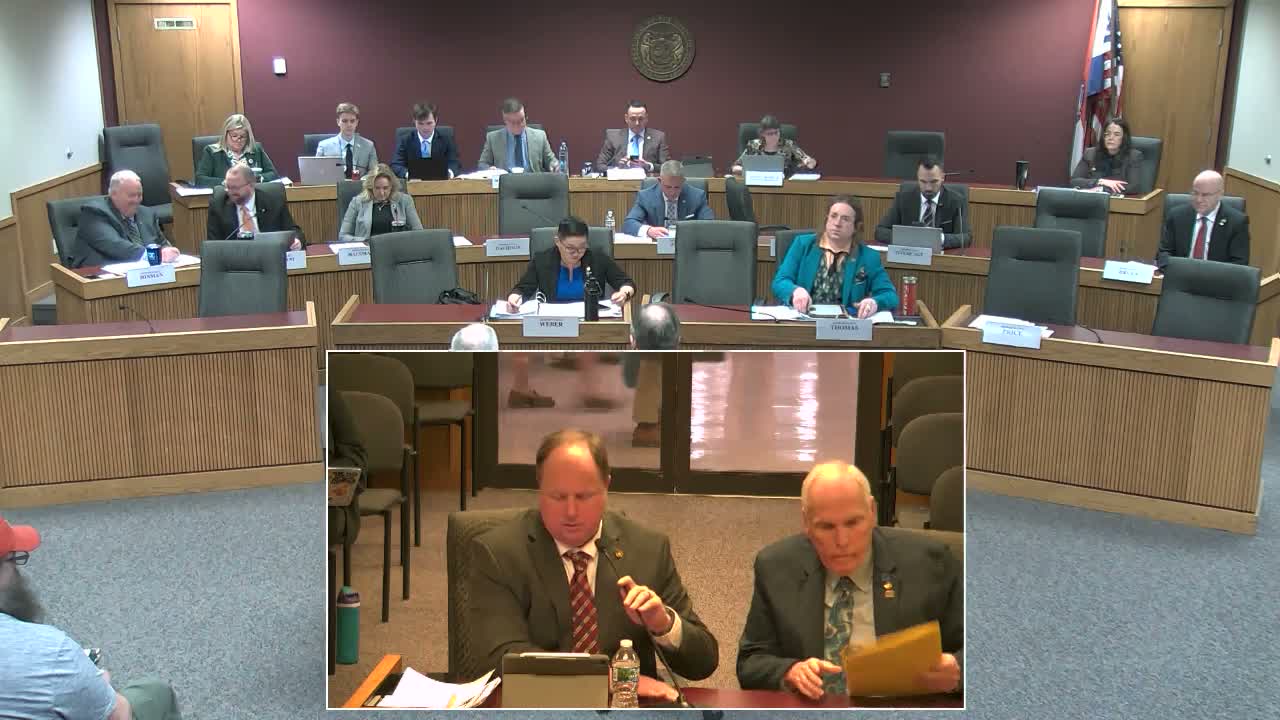
Representative Scott Miller (69th District), who presented HB 1746, told the committee the bill’s purpose is "to establish that AI shall not have personhood and to manage risk through responsibility and accountability." Miller framed the proposal as a precautionary measure to keep development "in the light" and said similar legislation has appeared in Oklahoma, Idaho and Utah.
During the committee exchange, members asked how liability would be allocated among developers, deployers and users. Representative Fuchsch asked whether the draft, as written in section 8, would effectively shield developers from liability for misuse by users. Miller responded that the bill will reference the National Institute of Standards and Technology (NIST) AI Risk Management Framework as a state standard; where Missouri is silent, he said, the NIST framework would be applied. He added that the draft includes provisions to recognize companies that dutifully follow established standards and that compliance may absolve them from criminal or punitive damages, while not granting them a "free pass" for all liability.
Committee members also pressed the sponsors to operationalize the bill’s use of the term "harm." Miller said harms can be physical, emotional, financial or reputational and that the central question is who is accountable when harm occurs; members requested clearer, statutory language to distinguish developers, deployers and users in the final draft.
A member raised federal context, asking whether President Trump’s Executive Order 14179—cited in the hearing as an effort to avoid a patchwork of state laws—would conflict with state action. Miller said executive orders do not by themselves preempt state law and framed the bill as consistent with national standards by relying on NIST.
Kevin Hurdle, a resident, testified in favor of the bills and urged a proactive approach to AI regulation rather than waiting for harms to arise. Committee staff noted that radio personality Elizabeth Kaiser submitted online testimony in support and that she is an attorney.
The committee concluded the hearing without taking votes on HB 1746 or HB 1769; sponsors indicated they would circulate clarifying language and proposed edits for committee review.
The hearing record shows questions remain about the statutory definitions of developer/deployer/user, precise liability standards, and how "harm" will be defined in statute—issues sponsors said they would address in further drafting.