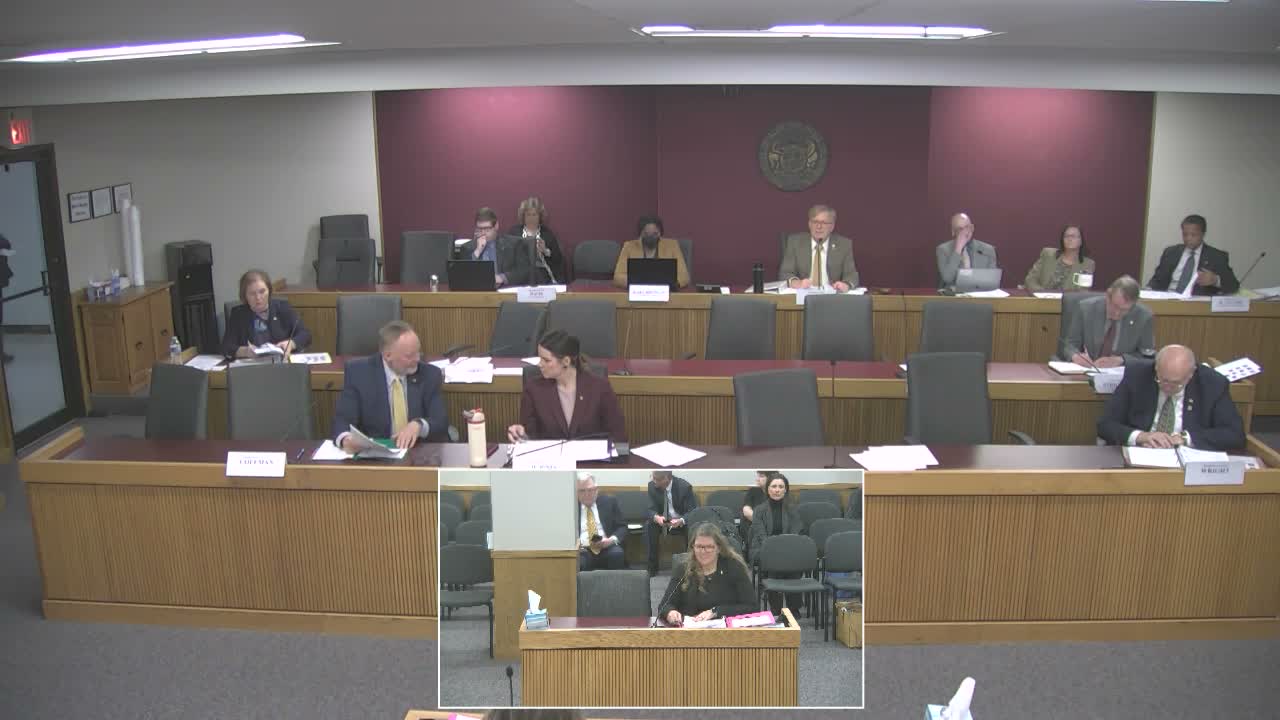
Bill would let counties dedicate local sales tax to early childhood services with voter approval
Loading...
Summary
Rep. Cecily Williams presented HB 2379 to let counties, after voter approval, dedicate an existing local sales-tax mechanism to early childhood education and place revenues in a dedicated fund managed by Community Children's Services Funds; witnesses emphasized capacity gaps and local control while lawmakers pressed for clarity on licensing, eligibility, transparency and overlap with school funding.
Representative Cecily Williams (District 111) presented House Bill 2,379 to the House Ways and Means Committee as a locally driven option to expand early childhood capacity. "This bill doesn't impose a tax," Williams said; "counties may act only after voter approval at the ballot box." The bill permits counties to dedicate an existing local sales-tax mechanism — subject to the county's decision and a voter referendum — to an early childhood fund administered by a Community Children's Services Fund board and used only for voter-approved early childhood purposes.
Sponsor and witnesses said the bill is intended to provide a predictable, locally governed revenue stream that county boards and existing Children's Services Funds can administer. Greta Backs, attorney for We Power, told committee members the measure would create a streamlined way to place locally approved sales-tax revenue into existing children's services governance structures (the bill references changes to section 67-5-47 and adds a new section 67-5-420). Charlie Cooksey of We Power, Scott Penman of the St. Louis County Children's Services Fund, and other provider and advocacy witnesses described long wait lists, capacity shortages — particularly for ages 0–2 — and the benefits of local control and transparency in grantmaking and audits.
Lawmakers repeatedly asked for clarity on three operational points: which providers are eligible to receive funds (DESE-licensed centers, license-exempt church programs, or registered home providers), how the board governing the fund is appointed (testimony indicated the county executive appoints board members in St. Louis County), and whether funding would duplicate or overlap with existing DESE, DSS subsidy, or school-district funding. Scott Penman and other witnesses noted the statutory list in the bill already includes local education agencies as potential recipients and emphasized that existing children's services funds are subject to sunshine laws and audits. Several legislators asked that eligibility, reporting, and transparency rules be tightened so voters and lawmakers could see how funds are allocated.
Supporters from across the state — including representatives of children's services funds, childcare providers and advocacy organizations — said the proposal fills gaps where school systems and state programs do not currently provide infant and toddler capacity. Denise (Lee Mae Child and Family Center) described operating costs and a funding gap that threatens 99 local slots in her center and said predictable local funding would help sustain infant care slots that schools typically do not provide. Opponents were not present in force at the hearing, but some committee members expressed caution about potential duplication with other funding sources and asked for explicit licensing and eligibility language before the bill advances.
Ending: The committee concluded the HB 2379 hearing without a vote. Sponsors and witness organizations said they would provide additional drafting clarifications about eligibility, licensing references to DESE, transparency requirements for boards, and the mechanics for St. Louis County's municipal allocation exception prior to future committee action.