
Missouri committee hears bill to require seed dealers to sign invasive-plant affidavit
Get AI-powered insights, summaries, and transcripts
Subscribe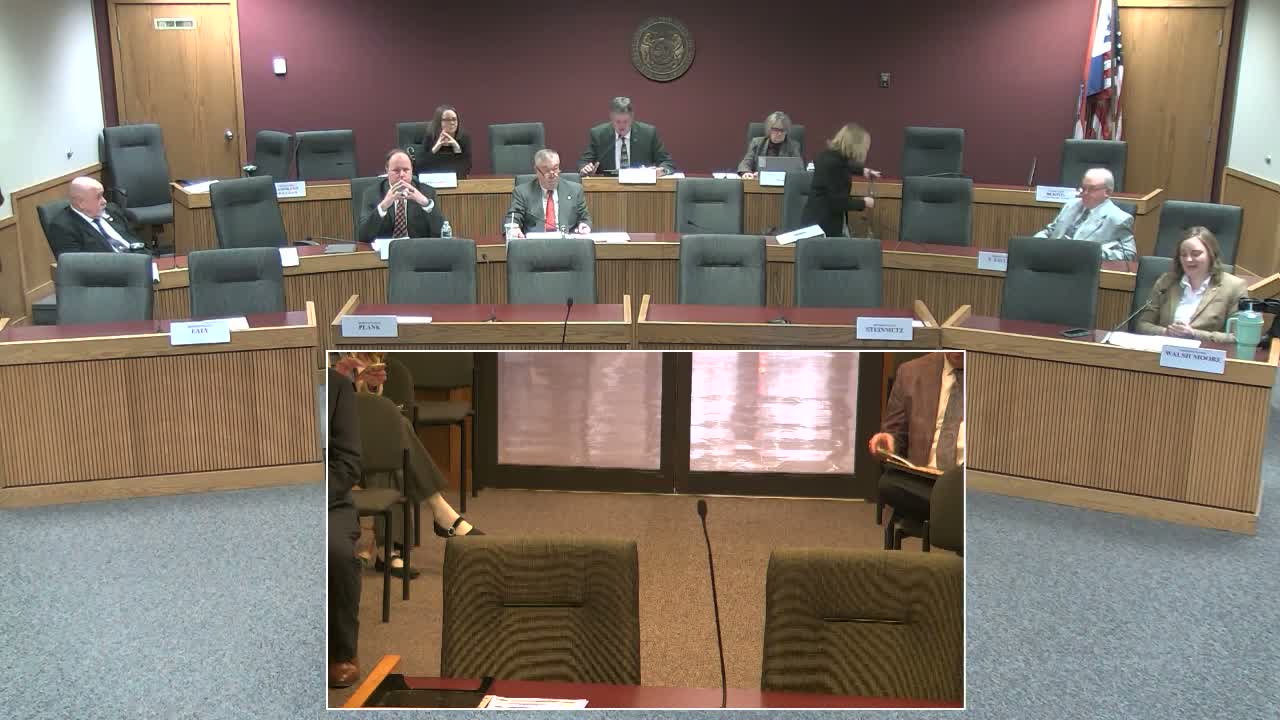
Summary
House Bill 16-24 would extend last year’s affidavit requirement to seed dealers, barring the commercial sale of seeds for six listed invasive plants; conservation groups and livestock advocates voiced support while at least one business owner warned of unintended impacts on medicinal or antiparasitic uses.
Representative Bruce Sassman introduced House Bill 16-24 to the House Conservation and Natural Resources Committee, saying the measure is a technical follow-up to last year’s legislation that addresses gaps left when the prior bill focused on nurseries and nursery dealers. "House bill 16-24 is almost identical to the previous bill," Sassman said, and this year "the legislation simply adds the same requirement to seed dealers for the same invasive six plants." He also noted minor corrections to scientific names and formatting in the earlier statute.
Why it matters: Last year’s Senate Bill 105 required nurseries to sign an affidavit that they would not knowingly sell certain invasive species; proponents said that failure to cover seed dealers left an obvious loophole that could undermine enforcement. Supporters told the committee the amendment is intended to prevent commercial introductions of the listed species and to protect native vegetation and agricultural land.
Support: Several witnesses went on record in favor. Richard Sheets of the Missouri Municipal League told the committee the league supported last year’s bill and views HB 16-24 as a necessary correction. Carolyn Niswonger of the Sierra Club, speaking for the organization’s statewide members, said the change strengthens the regulatory framework. Shannon Cooper of the Missouri Cattlemen’s Association highlighted perilla mint’s toxicity to cattle as a rationale for supporting the bill, and private landowner Richard Tom described decades-long battles with invasive plants such as Callery pear on roadways and rural property.
Opposition: Lisa Pinette of Armor Vine testified in opposition, telling the committee her concern that the list could expand over time and that some of the named plants have legitimate medicinal or antiparasitic uses. "All five of these actually treat cancer, and they're antiparasitic," Pinette said, arguing the bill could restrict landowner choice. The committee followed with a short exchange in which Representative Taylor invited opponents to inspect plants on his farm, and sponsors clarified that the affidavit applies to sellers rather than criminalizing possession.
Procedure and next steps: The hearing concluded without a committee vote. Chair closed public testimony after supporters and one opponent spoke. The bill remains pending, and any formal committee action would be taken at a subsequent meeting.
Sources and provenance: Testimony and exchanges recorded in the House Conservation and Natural Resources Committee hearing on HB 16-24.